Winter weddings are some of my favourites. The light is soft, the settings feel intimate, and couples often look relaxed because they're not battling summer heat.
But winter in the UK also brings short days, grey skies and cold hands. A little planning is what separates beautiful portraits from rushed, shivering ones. Here's what I tell every couple planning a winter wedding.
1. Plan your day around daylight
In December, sunset in much of England is before 4pm, and earlier further north. That's the biggest factor in your photography.
If your ceremony is at 2pm, the best natural light may already be fading by the time you're married. So:
Do couple portraits before the ceremony. A first look is a good way to do this.
Choose an earlier ceremony time. A late-morning or midday ceremony gives you far more usable light.
Check the actual sunset time for your date and city. Don't rely on a rough guess.
Here are approximate sunset times for the main cities I cover, so you can see how little daylight you have:
City | 1 Dec 2026 | 21 Dec 2026 | 15 Jan 2027 | 15 Feb 2027 |
|---|---|---|---|---|
London | 3:54pm | 3:53pm | 4:20pm | 5:14pm |
Bristol | 4:04pm | 4:03pm | 4:30pm | 5:24pm |
Birmingham | 3:57pm | 3:54pm | 4:22pm | 5:19pm |
Leicester | 3:53pm | 3:51pm | 4:19pm | 5:16pm |
Nottingham | 3:51pm | 3:49pm | 4:17pm | 5:15pm |
Manchester | 3:53pm | 3:50pm | 4:19pm | 5:18pm |
Leeds | 3:49pm | 3:46pm | 4:15pm | 5:15pm |
Newcastle | 3:42pm | 3:39pm | 4:09pm | 5:12pm |
These are UK clock times and can vary by a couple of minutes, so check your exact date and venue. Remember that usable light fades before sunset, so plan portraits for at least an hour earlier.
For a full breakdown, see our wedding day photography timeline guide.
2. Keep portraits short and spread them out
Nobody looks their best after 40 minutes outdoors in January. Instead of one long session, I often split portraits into two or three short bursts of 10 to 15 minutes, with warm-up breaks in between.
You get relaxed expressions, warmer hands and better photographs.
3. Choose venues with great indoor light
A winter wedding should never depend on outdoor photos alone. When you're viewing venues, look for:
Large windows with soft natural light
Staircases, galleries or atriums
Light-coloured walls that bounce light well
Warm, tasteful lighting rather than harsh overhead lights
Quiet corners where we can step away from guests
Venues like civic halls, historic hotels and country houses often photograph beautifully in winter. See our guides to Derbyshire winter weddings and Newcastle Civic Centre winter weddings for examples.
4. Make the most of grey skies
Overcast winter light is actually flattering. It's soft and even, with no harsh shadows. What matters is how it's handled.
Look for open shade and bright windows to give faces gentle light.
Use flash where needed. Off-camera flash can add warmth and shape on dull days and after dark. It also helps keep skin tones accurate, which matters for darker skin in flat light. See our lighting basics post.
Use the evening. Fairy lights, candles and warm interiors can give you dramatic, romantic portraits after sunset.
5. Dress for the photographs and for the weather
Your outfit should look good and keep you comfortable.
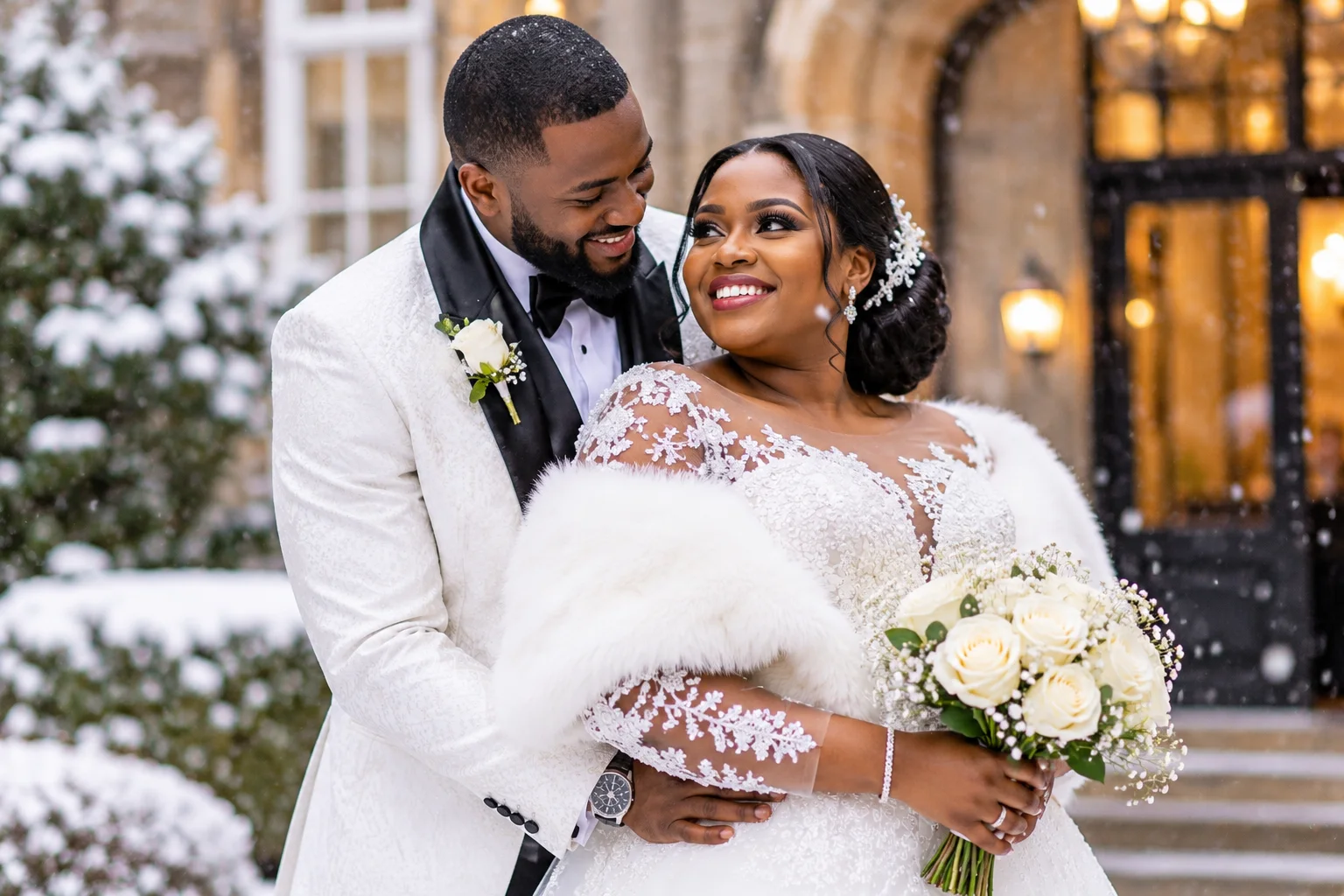
Bring a coat, wrap or cape. A tailored coat, faux fur wrap or shawl looks elegant in photos and keeps you warm between shots.
Think about traditional attire. If you're wearing aso-oke, gele, an agbada or other statement pieces, bring a layer that matches or complements it. Wind can move gele and fabric, so we can plan positions that protect your look.
Plan your shoes. Wet grass and cold ground are common. Bring a second pair of comfortable shoes for walking between locations.
Warm hands matter. Hand warmers in a pocket or bag can make a real difference.
Protect your hems. A longer dress can pick up mud. Ask a bridesmaid or family member to help with a quick lift when needed.
6. Pack a small "winter kit"
Ask someone to carry a small bag with:
A large umbrella, ideally clear or neutral-coloured
Towels for wet seats or damp surfaces
Lip balm and hand cream
Hair pins and a small hairspray
A flask of something warm
Tissues and blotting papers
It's a small thing, but it keeps you comfortable and your photos relaxed.
7. Have a rain plan, and a cold plan
Rain is part of the British wedding experience. Decide in advance where we'll shoot if it's wet or very windy. Our rain plan guide covers this in detail.
A good wet-weather plan includes:
A sheltered outdoor spot, such as a porch, archway or covered walkway
An indoor location with good light
An umbrella that suits your outfit
A little flexibility with timing
Some of my favourite photos have been taken in drizzle, frost or mist.
8. Use the season
Winter gives you things summer can't:
Frosty mornings and low sun
Bare trees and misty parks
Christmas lights and festive decorations
Candlelit rooms
Warm interiors with a cosy feeling
If your venue has seasonal decorations, we can use them in your portraits instead of working around them.
9. Tell your guests the plan
Short days need a clear schedule. Let your parents, wedding party and planner know when portraits will happen so people are ready and nobody is waiting in the cold. Tell the ones who need to be in group photos where to meet.
Quick checklist for winter wedding portraits
Check sunset time for your date and location
Plan couple portraits earlier in the day
Keep outdoor sessions short, with breaks
Choose a venue with good indoor light
Bring a coat or wrap that works with your outfit
Pack hand warmers, an umbrella and a small winter kit
Agree a rain plan with your photographer
Share the timeline with your wedding party
Planning a winter wedding?
I photograph winter weddings across the UK, including Nigerian, African and multicultural celebrations. If you're planning one, send me your date and venue and I'll help you build a timeline around the light.