If you are planning a UK wedding, you need a wedding rain plan. It does not matter whether you are marrying in June or December. British weather can turn quickly, and the couples who enjoy their day most are the ones who decided in advance what rain would change and what it would not.
Here is the good news from behind the lens: rain does not ruin wedding photos. A wet day, planned for properly, often gives you some of the most atmospheric and emotional images of the whole wedding. This guide covers how to build your rain plan, what to ask your venue, how to handle umbrellas, and how your photographer should work when the sky turns grey.
Is rain on your wedding day really a problem?
Rain is a problem only when nobody has planned for it. The things that cause stress on the day are predictable:
Guests standing outside with no cover during drinks or confetti
A portrait session that was designed around a garden or park
A tight timeline with no buffer for moving everyone indoors
Dresses, suits and hair that are suddenly exposed
Every one of these can be solved in advance. Overcast and rainy light is also soft and even, which flatters skin tones, reduces harsh shadows and makes colour look rich. On a bright, sunny day I often have to work harder to find shade. On a wet day the light is already doing half the job.
And yes, many cultures treat rain on a wedding day as a blessing. You are allowed to lean into that.
Build your wedding rain plan before the day
Treat your rain plan as a short document, not a worry in the back of your mind. Write down answers to these questions at least a few weeks before the wedding:
Where does the ceremony move if it rains? If you are marrying outdoors, confirm the indoor option and its capacity.
Where do drinks and canapés happen? Check for a covered terrace, orangery, marquee or large entrance hall.
Where will couple portraits happen? Choose at least two indoor spots and one covered outdoor spot.
Who decides? Agree who makes the call on the day, and by what time. A planner, venue manager or a trusted family member works well.
What do you need to buy or hire? Umbrellas, a few towels, spare shoes and a small kit for fixing hair and make-up.
Share the plan with your photographer, videographer, planner and venue. Everyone should know the plan before the day, not find out in the car park.
Indoor portrait spots to ask your venue about
This is the question that makes the biggest difference. When you speak to your venue, ask to see these areas and ask whether they are available for photos:
Large windows and glass doors. Window light is beautiful for portraits and makes a wet day look intentional.
Staircases and galleries. A grand staircase, balcony or landing gives height and shape to an image.
Orangeries, conservatories and glass-roofed rooms. You get daylight and a view of the rain without getting wet.
Covered porches and entrances. Even a deep doorway can give you an elegant, sheltered frame.
Corridors with character. Long hallways, archways and period features photograph well and are often empty.
Empty function rooms. Before the room is dressed for the reception, it can be a clean, quiet space for portraits.
If you are still choosing a venue, think about indoor photo space as seriously as you think about capacity. We have written venue guides for several cities that look at light and room layout from a photographer's point of view, including Leeds wedding venues, Manchester wedding venues and Birmingham wedding venues.
Umbrellas for wedding photos: what works and what to avoid
Umbrellas can be a gift or a headache. A few practical points:
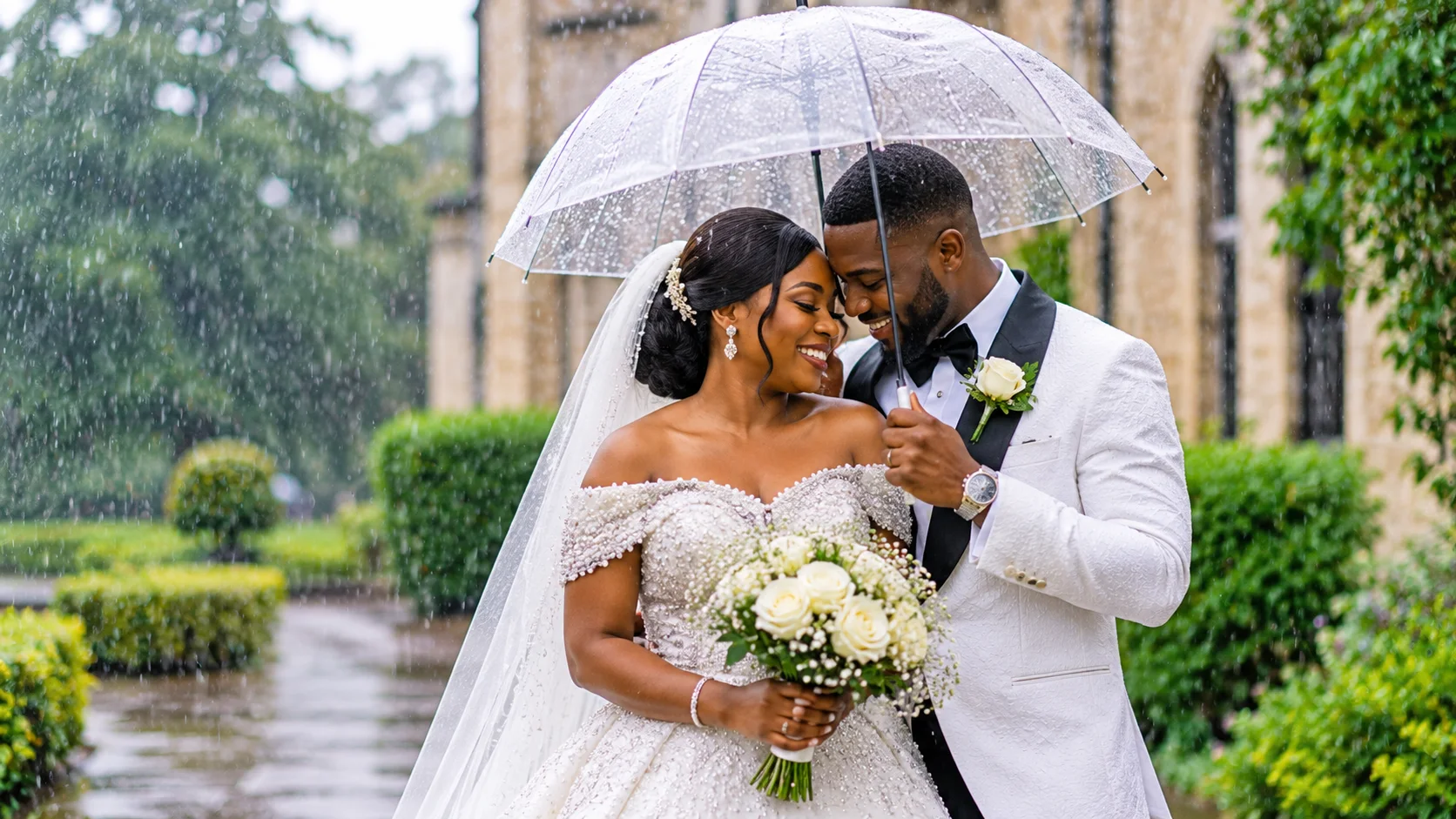
Clear umbrellas let light and expression through, so faces stay visible. They are popular for portraits and photograph well.
Large golf-style umbrellas are best for the couple, because they cover a wedding dress and give room to move.
Dark, small umbrellas can cast shadows across faces and make group photos feel cramped.
Have enough for the wedding party, and ask your venue whether they provide any.
Ask a guest or usher to be the umbrella holder during short outdoor moments, so the couple are not left holding one themselves.
For portraits, I often ask couples to step out from under the umbrella for a few frames, when the rain is light, and then back under it. Those mixed shots, with a little rain in the air and a lot of connection, are often the favourites.
How your photographer handles a rainy wedding
When you are choosing a photographer, ask how they work in poor weather. A confident wedding photographer should be able to tell you:
Which of their cameras and lenses are weather-sealed, and what protective covers they carry
How they use off-camera flash or fill light when the light is dull or the venue is dark
Which indoor spots they look for at a venue before the day
How they keep your timeline moving when the weather forces a change
Whether they have photographed your venue in the rain before
On a rainy wedding day, a good photographer will lean on reflections on wet pavements, umbrellas, steamed windows, candid moments of guests running in, and close, intimate portraits. Overcast light also suits rich colours well, which matters if your day includes bold traditional attire or aso-ebi. I wrote more about that in my guide to photography lighting basics for a wedding day, including how to light darker skin tones properly.
Timeline changes for a wet day
A rain plan only works if the timeline can bend. These small changes make a big difference:
Add a 30-45 minute buffer between the ceremony and drinks, for moving guests and umbrellas.
Take portraits during any dry window. If the rain pauses, be ready to go outside quickly, even for five minutes.
Do family group photos indoors. Choose a bright room or entrance hall, and give your photographer a clear list of groups.
Consider a first look indoors before the ceremony, so you have couple portraits secured whatever happens next.
Keep the portrait list short. Quality matters more than quantity on a wet day.
If you have not built your timeline yet, my wedding day photography timeline guide walks through it step by step. Winter weddings need extra care because daylight is short, so the Derbyshire winter wedding photography guide is worth a read even if you are marrying elsewhere.
Rainy wedding photo ideas
Here are some ideas you can bring to your photographer:
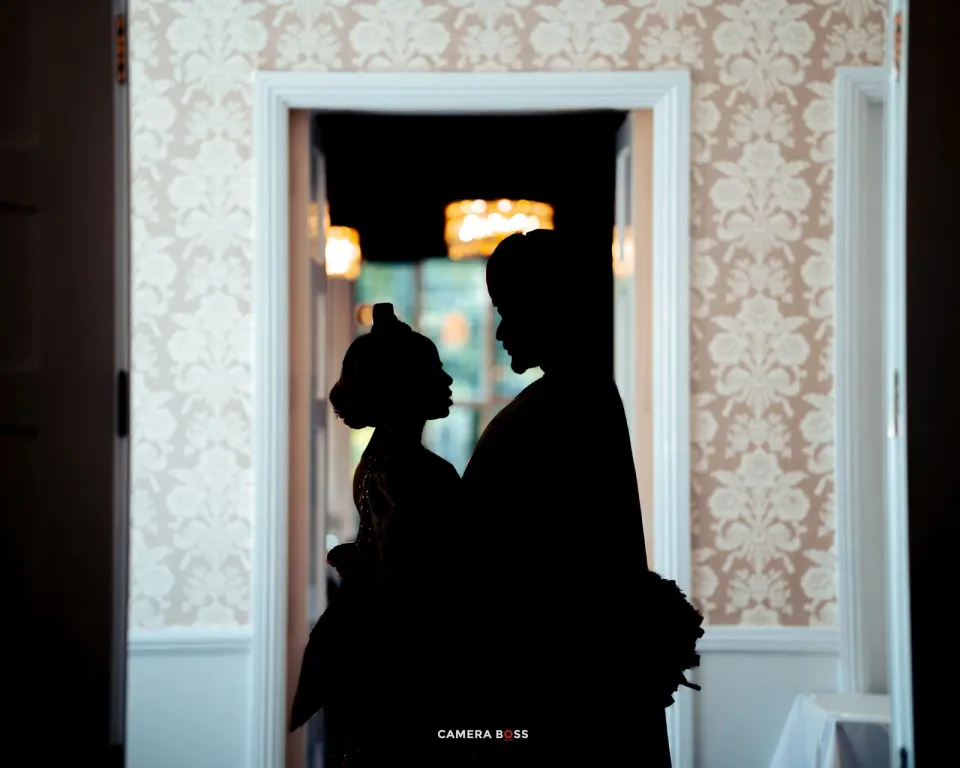
The doorway portrait. Stand just inside a large door or arch, with the rain behind you.
Window light portraits. Face a big window for soft, flattering light.
The clear umbrella shot. A close portrait looking up through a clear umbrella.
Puddle reflections. A wide shot of the couple walking, with their reflection on wet ground.
Guests under umbrellas. A group of guests sharing umbrellas on the way to the ceremony.
Steamed-up car or window. A quiet, romantic detail.
Dancing in the rain. If the rain is light and you are up for it, a short outdoor moment can become your favourite photograph.
The best rainy wedding photos usually feel unforced. Relax, stay close to your partner and let the weather become part of the story.
What to pack in your wet weather kit
Large umbrellas (including a few clear ones)
Towels and a small hair towel
Spare shoes or flat sandals for muddy ground
Wet wipes and tissues
Hairspray, pins and make-up essentials
A cover-up, shawl or jacket for the wedding party
A bag or box for wet umbrellas, so they do not end up in your portraits
Wedding rain plan UK: frequently asked questions
What should I do if it rains on my wedding day?
Stay calm and follow your plan. Move the ceremony or drinks to your indoor option, use dry windows for portraits, and let your photographer guide you to the best sheltered locations.
Can you still get good wedding photos in the rain?
Yes. Soft light, reflections, umbrellas and close portraits can produce striking wedding photos. Many couples say their rainy-day images are their favourites.
How do I plan wedding photos if it rains?
Ask your venue for indoor and covered photo spots, build a buffer into your timeline, share a rain plan with your photographer, and prepare umbrellas and a small wet weather kit.
Is rain on your wedding day good luck?
In many cultures, yes. Rain is often seen as a blessing, a sign of fertility or a symbol of a fresh start. Whatever you believe, it is a nice thing to think about on the morning of the wedding.
Should I ask my photographer about rain before booking?
Absolutely. Ask how they work in wet weather, what equipment they carry, and whether they have photographed your venue in the rain. It tells you a lot about their experience.
Do I need a rain plan for a summer wedding?
Yes. UK summers can bring sudden showers, so having a plan for any month is sensible.
Final thoughts
Your wedding rain plan does not need to be complicated. Know where everyone goes, give your photographer a clear indoor option, and build a little extra time into the day. If it stays dry, you have lost nothing. If it rains, you will be calm, and the photographs will look beautiful.
If you are planning a wedding in 2027 and want a photographer who knows how to work in any weather, I would love to hear about your day. You can check your date and get in touch here.