Trends & Industry · Cameraboss Blog
Grain, Warmth, and the Feeling You Cannot Fake: Why 35mm Film Is Having a Renaissance at UK Weddings in 2026
We live in the age of technically perfect photography. Every modern digital camera can produce razor-sharp, colour-accurate, noise-free images in near darkness. Presets can warm a photograph in seconds. AI tools can relight a face, remove a shadow, smooth a background. And yet, in 2026, a growing number of couples planning their weddings in the UK are asking for something that no preset, no AI tool and no editing technique can truly replicate: the look, the grain, and the emotional quality of real 35mm film.
This is not nostalgia. It is something deeper. This piece explores what is driving the analogue revival at UK weddings, what 35mm film actually does that digital cannot, and what both couples and photographers should understand before stepping into this conversation.
1. What Is 35mm Film Wedding Photography?
35mm film photography uses light-sensitive emulsion on a physical roll of film — 24 or 36 frames per roll — to capture an image chemically rather than digitally. The camera has no instant preview. You cannot check the back of the camera after each shot. You cannot “spray and pray.” Each frame must be considered, composed and exposed correctly before the shutter fires, because there is no deleting it afterwards and trying again.
Wedding photographers who shoot on 35mm film — whether on classic SLR bodies or rangefinders — typically send their rolls to a specialist lab after the wedding day, where the film is developed, scanned and returned as digital files. The resulting images carry a quality that is not achievable through digital processing: organic grain structure, tonal depth in the shadows, a softness in the highlights, and skin tones that render with a warmth that feels almost pre-digital in the best possible sense.
For photographers, it is also a creative discipline. Shooting film changes how you move on a wedding day. It slows you down. It makes you more deliberate. It forces you to read light before you raise the camera, not after.
2. What Film Does That Digital Cannot Replicate
This is the question at the heart of every conversation about analogue photography, and it deserves a careful answer rather than a romantic one.
Digital sensors capture light data with extraordinary precision, and modern processing can add grain, fade highlights, and introduce warm tones in post-production. Many photographers offer a “film-inspired” edit as a matter of routine. But couples and photographers who have worked with real film consistently report the same observation: it does not look the same.
Real 35mm grain has a structure — organic, varied, and specific to the emulsion being used — that is fundamentally different from the uniform noise that digital sensors produce and that grain presets try to imitate. Real film highlight rolloff — the way the brightest parts of a frame gently lose detail rather than clipping into white — has a quality that is difficult to reverse-engineer in Lightroom. And the way film renders brown and dark skin tones — with a warmth and depth that honours the full tonal range rather than flattening it — is something that matters enormously at weddings where skin tones span a beautiful spectrum.
Real 35mm film feels like memory. The grain is texture, warmth, imperfection in the best way — and you simply cannot fully fake this. It comes from real light, real emulsion, and real moments.
This is not a criticism of digital photography, which remains the primary tool for most wedding photographers for very good reasons — versatility, speed, reliability, and the ability to shoot thousands of frames across a long day. But it is a clear-eyed acknowledgement that film and digital produce genuinely different images, and that difference is driving real demand in 2026.
3. Why UK Couples Are Asking for Film in 2026
The trend has been building quietly for several years, but 2026 feels like the year it moved decisively into mainstream wedding conversations in the UK. The broader “anti-trend” shift in wedding photography — couples pushing back against over-processed, over-posed, “this could have been any wedding in any year” imagery — has created the perfect conditions for analogue to reassert itself. We explored that shift in depth in our piece on the anti-trend era and timeless wedding photography.
But film is not simply a reaction to digital excess. It is an affirmative choice for couples who want their wedding photographs to feel like they belong to a specific, personal moment rather than a trend cycle. Couples who grew up with film — or whose parents’ wedding albums were shot on film — often describe a visceral recognition when they hold a film print or see a scanned film image on screen. It looks like something real happened. Like it was worth capturing carefully, not just efficiently.
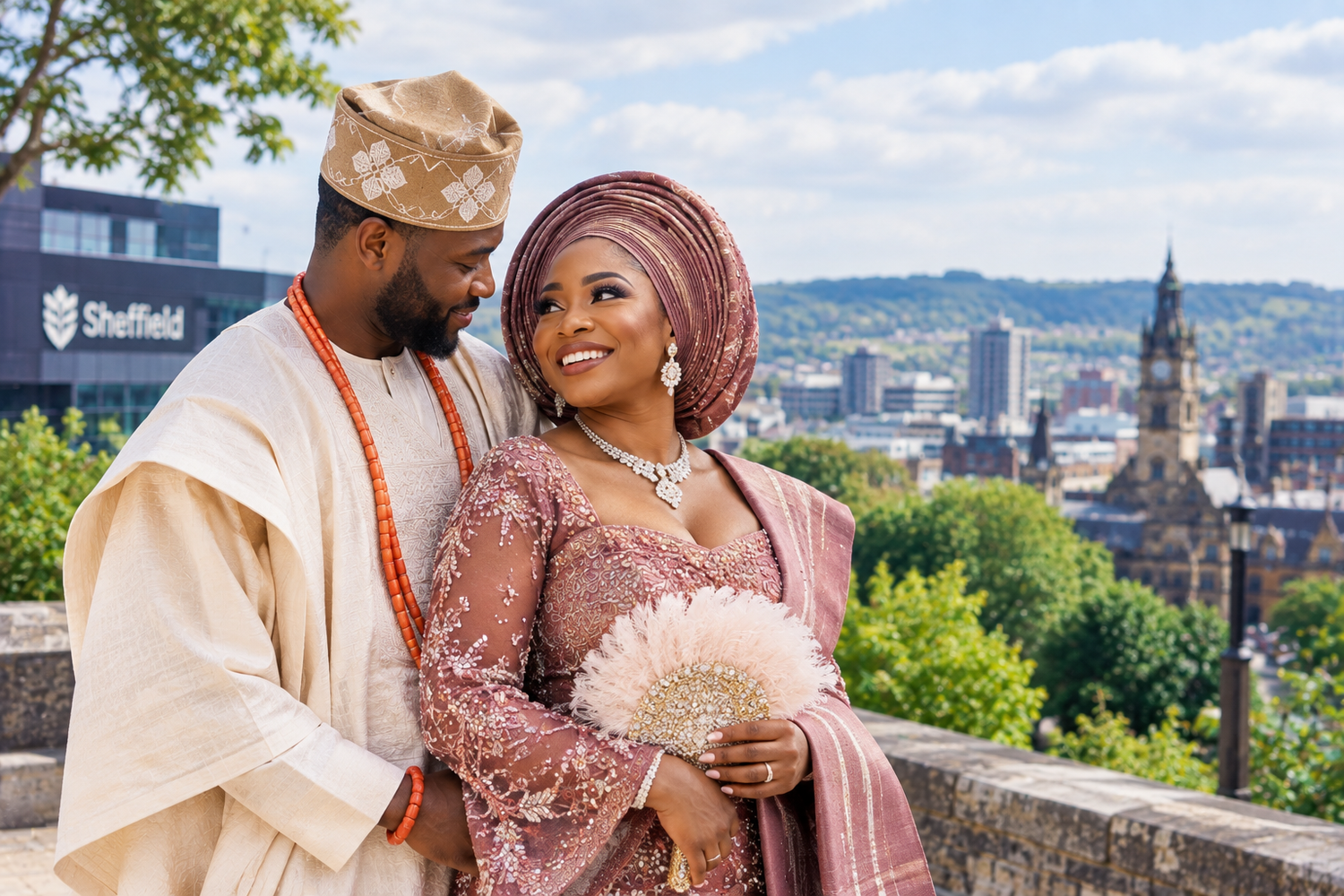
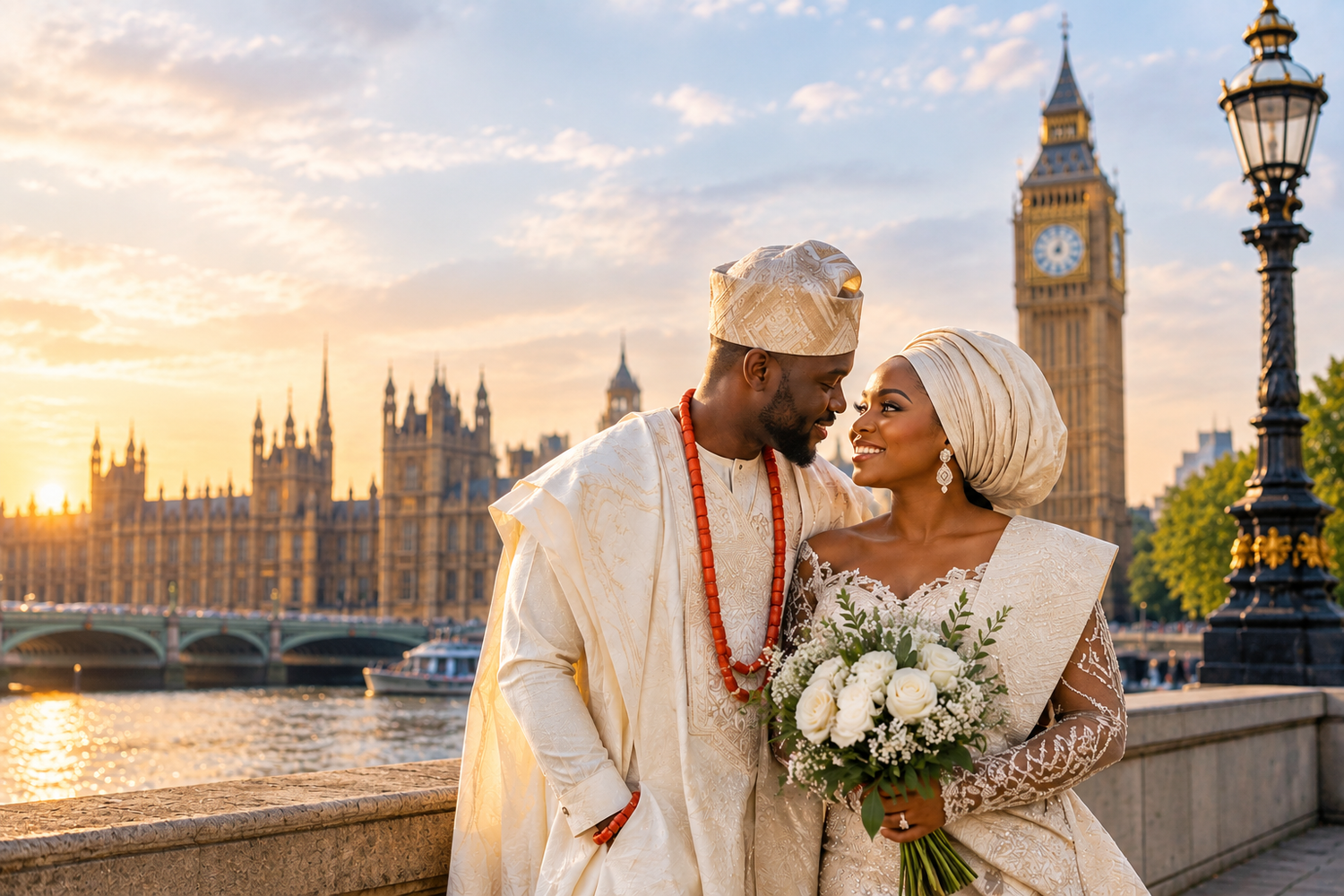
There is also a cultural dimension that matters in the world Cameraboss operates in. Nigerian and African wedding celebrations — with their extraordinary colour, their layered fabrics, the warmth of skin against candlelight and afternoon gold — are precisely the kind of visual environments where film emulsions come alive. George fabric in the afternoon. Coral beads in warm tungsten light. A couple in Isiagu and white lace at golden hour. These moments respond to film the way they respond to the finest fine art printing.
4. How Film and Digital Work Together on a Wedding Day
Most photographers who shoot film in 2026 do not do so exclusively. They work in a hybrid: digital for the fast-paced, unpredictable moments of the day — the ceremony, the Igba Nkwu procession, the first dance, the speeches — and film for the considered, slower moments where they have light, space and time to work deliberately.
The portrait session — whether that is the couple alone at golden hour, or a formal family portrait at the traditional ceremony — is where film typically shines hardest. The pre-wedding shoot is another natural environment for analogue work; we make the case for why Nigerian and African couples in the UK should never skip it in our guide to the pre-wedding shoot.
If you are a photographer reading this and wondering whether to integrate film into your practice: the honest answer is that it changes the way you see on a wedding day, not just the way your images look. Shooting even one roll of 35mm on a job recalibrates your eye and slows your decision-making in a way that tends to improve your digital work too. The two media are not rivals. They are complements.
5. What This Means When Choosing Your Wedding Photographer
If you are a couple interested in film photography for your wedding, there are a few practical things worth understanding before you enquire.
First, shooting on film does not mean receiving fewer images. A hybrid photographer may produce the same total gallery, with a portion of the images having the distinct film aesthetic. Second, film labs typically add a few days to the turnaround time for scanned images, so build this into your expectations around delivery. Third, and most importantly — ask to see real film work from your photographer’s past weddings. Not “film-inspired edits.” Not preset-filtered digital. Ask to see the actual grain, the actual tonal character, the way their chosen emulsions render light at a real wedding celebration.
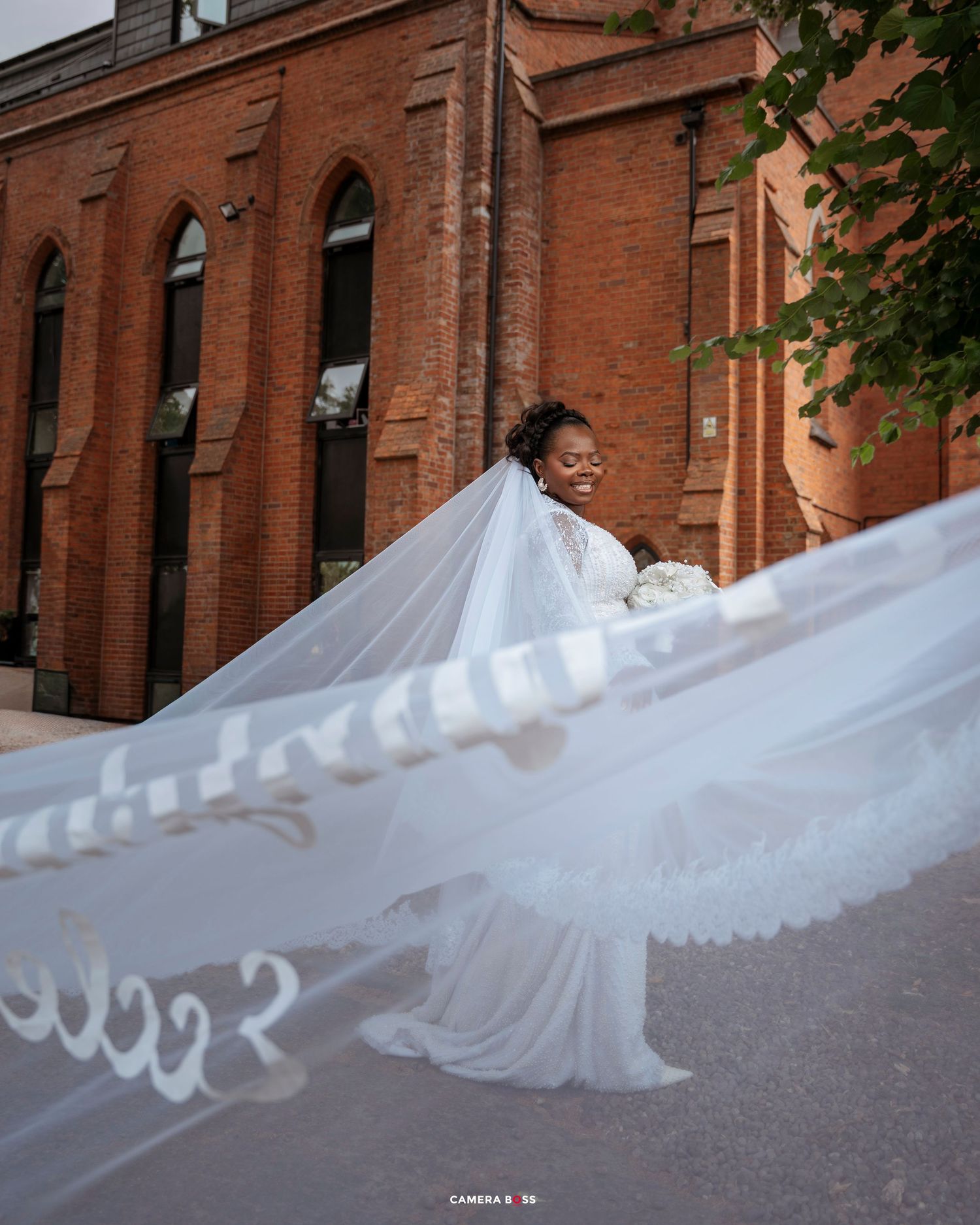
At Cameraboss, our approach to wedding photography has always been rooted in the fine art tradition — in the idea that a wedding is not a product shoot but a living document of something irreplaceable. Whether we are shooting on digital or on film, or moving between both on the same day, that philosophy does not change. It is the reason our work has been exhibited in galleries, and the reason couples trust us to carry their most important memories.
You can explore how that approach translates across different celebrations in our wedding portfolio, and read the story of Joanna & Jonathon’s Anglo-Nigerian weekend at Beamish Hall — a wedding that required exactly the kind of tonal sensitivity and editorial precision that makes the film conversation so compelling.
Frequently Asked Questions
Is 35mm film more expensive than digital wedding photography?
Film involves real, per-roll costs — the film itself and professional lab development and scanning — so it does typically carry an additional investment over a purely digital package. However, most hybrid photographers include a curated number of film frames within their overall package rather than charging by the roll. Discuss this at enquiry stage so you know exactly what you are receiving.
Will film work for our Nigerian or African wedding, with so many people and so much movement?
Absolutely — with the right approach. Most photographers use digital for the high-energy, fast-paced elements of a Nigerian or African wedding (the dancing, the procession, the Igba Nkwu ceremony) and reserve film for the portraiture and considered moments. The combination gives you the best of both worlds: complete, spontaneous coverage alongside a selection of film images that feel genuinely timeless.
How does film render Black and brown skin tones?
This varies significantly between film stocks. Some emulsions — particularly Kodak Portra and Fuji Pro — are celebrated for their warm, flattering rendering of darker skin tones and their ability to hold highlight and shadow detail simultaneously. The key is choosing a photographer who understands which stocks work for their light conditions and who exposes correctly for the full tonal range of your celebration, not just the lightest skin in the room.
Can I request film for just part of my wedding day?
Yes — in fact, many couples choose to have film specifically for their couple portrait session and a few key documentary moments, while the rest of the day is covered digitally. It is a very practical arrangement that lets you enjoy the film aesthetic in the images most likely to become prints and heirlooms, without any compromise on coverage volume or speed.
The analogue revival at UK weddings in 2026 is not about turning the clock back. It is about making an intentional choice — in an era of unlimited digital frames and instant gratification — to slow down, to expose thoughtfully, and to produce images that carry a quality the algorithm cannot manufacture. For photographers, it is a creative discipline worth exploring. For couples, it is a conversation worth having with whoever you trust to carry your memories.
If you want to see how Cameraboss approaches the intersection of fine art, cultural richness and contemporary wedding photography, follow us on Instagram at @thecameraboss — where we share both the work and the thinking behind it. And if you are ready to start a conversation about your own wedding, we would love to hear from you.
Curious About What Cameraboss Could Bring to Your Wedding Day?
Explore our portfolio, discover our approach to fine art wedding photography across the UK, and reach out to start a conversation. We would love to know what you are planning.