The Anti-Trend Era: Why 2026 Couples Are Choosing Timeless Wedding Photography Over Chasing Trends
Something has quietly shifted in wedding photography. Couples who once arrived at consultations with mood boards full of golden-toned presets and perfectly arranged flat-lays are now asking a different kind of question: will this still look beautiful in twenty years? The industry has a name for what’s happening. It’s called the anti-trend era — and it is changing the work we make and the conversations we have with every couple who comes to us.
I want to explore what this shift actually means — both for photographers navigating an industry in the middle of a genuine aesthetic reckoning, and for couples deciding how they want their wedding day remembered. Because this isn't a passing Instagram cycle. It's a fundamental reorientation in what people value from one of the most important visual records of their lives.
1. The Death of the Preset Look: True-to-Colour Is the New Standard
For much of the 2010s and into the early 2020s, wedding photography was defined by its edits as much as its images. Couples could tell in a single scroll which photographer used which preset pack. Warm, orange-shifted highlights. Crushed blacks. A skin tone somewhere between reality and a J.J. Abrams lens flare.
That era is ending. In 2026, the most sought-after aesthetic is one where the editing is essentially invisible — where colours are accurate, skin tones are true to life, and the photographs could have been taken at any point in the last decade without screaming their production year. According to industry research, this is the dominant shift across UK wedding photography right now: clean, natural, true-to-colour grading that reflects what the eye actually saw in the moment.
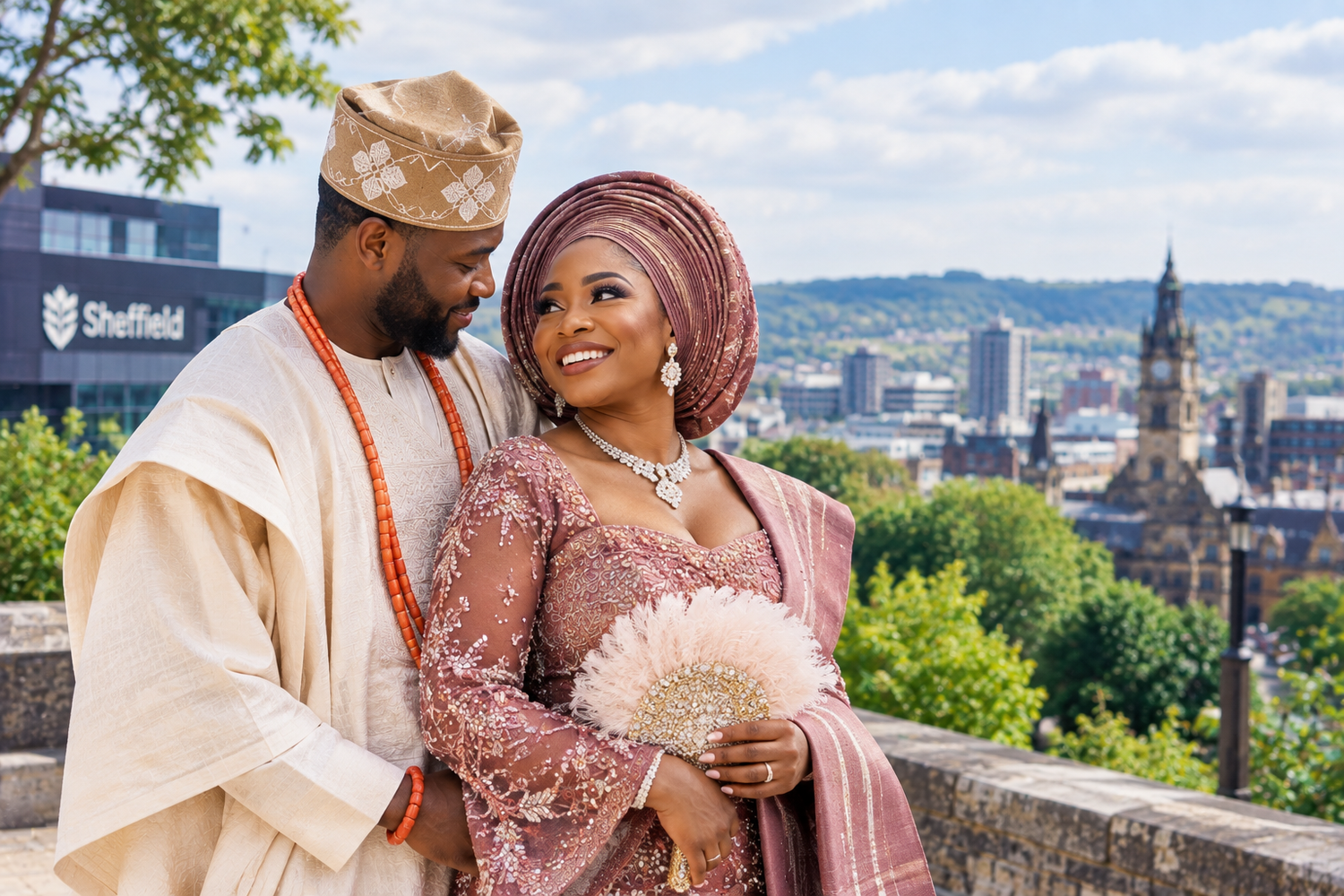
For Nigerian and African couples in particular, this matters profoundly. Vibrant aso-oke, the depth of Ankara print, the luminosity of a coral bead necklace — these deserve to be reproduced faithfully, not flattened through a filter that was designed for a certain skin tone or a certain aesthetic moment. True-to-colour editing honours what was actually there.
If you’re a photographer
Now is the moment to invest in colour science over preset packs. Clients are increasingly sophisticated about the difference between a consistent style and a tired filter. Learn your light, learn your sensor, and edit to what you saw — not to what Instagram valued three years ago.
If you’re planning your wedding
When assessing a photographer’s portfolio, ask yourself: do these images look like they were taken in a specific year, or do they simply look beautiful? The ones that look simply beautiful are the ones that will age well.
2. Documentary-First Storytelling Is Replacing Posed Perfection
A survey referenced widely in the UK wedding industry found that 68% of couples now prefer candid photography for their wedding. That number would have been unthinkable fifteen years ago, when a "wedding photographer" was essentially someone who produced a set of posed formal portraits with a documentary bonus reel. The hierarchy has completely inverted.
Today's couples — and particularly couples from communities where the wedding day is a full sensory experience, with emotion and noise and colour and movement — understand intuitively that the most powerful photographs are the ones that catch something rather than construct something. The grandmother weeping in the front pew. The ring bearer who's given up and fallen asleep on a chair. The bride's father watching his daughter walk away from him for the last time as his child.
These moments cannot be posed. They cannot be recreated for a second shot. They require a photographer who is invisible enough to be ignored and alert enough to never miss them.
That is the documentary discipline — and it is harder than posed work. It demands that the photographer understands people, not just light. It demands total presence over the course of a full day. And it produces something that no amount of constructed portraiture can replicate: photographic proof that your wedding actually felt the way you remember it feeling.
If you’re a photographer
Documentary is not a licence to stop being deliberate. The best work in this mode comes from photographers who understand light and composition as deeply as any portrait specialist — they simply apply that knowledge to capturing what’s happening rather than directing what happens. Build your candid IQ without abandoning your technical rigour.
If you’re planning your wedding
Ask to see a full wedding gallery from a photographer — not just the ten images on their homepage. A documentary photographer’s strength shows over 600 images, not six. Look for consistency, emotional range, and evidence that they were in the right place at the right time throughout the whole day.
3. Film and Analogue Aesthetics: Nostalgia With Purpose
The resurgence of film aesthetics in 2026 is real — but it's worth distinguishing between two very different things happening under the same banner. The first is the genuine use of analogue film cameras alongside or instead of digital, producing images with a grain, tonal range, and imperfection that digital has never perfectly replicated. The second is the application of film-emulating presets to digital images to approximate that look.
Both are having a moment. But the reason goes deeper than aesthetics. Film, and film-adjacent editing, strips away the clinical perfection of modern digital photography and returns something that feels more human. The slight grain. The natural colour bloom in the highlights. The way shadows hold detail without becoming pure black. These qualities don't feel dated — they feel permanent. They feel like memory rather than record.
For documentary wedding photography, this aesthetic is a particularly powerful tool. When the images already feel like something retrieved from the past, they carry an emotional weight that hyper-sharpened, pixel-perfect digital cannot always match.
We are not abandoning digital at Cameraboss — the resolution, the reliability in low light, and the capacity to shoot through a full Nigerian wedding weekend without changing rolls demands it. But the lesson of the film resurgence is worth absorbing: sometimes the most powerful thing an image can do is feel slightly imperfect. Like a real memory.
4. The Editorial-Documentary Fusion for Premium Couples
There is a fourth trend that sits at the intersection of everything above, and it is where the most sophisticated work in the UK wedding photography market is happening right now: the editorial-documentary fusion. This is not a stylistic compromise between two modes. It is a genuine synthesis.
The editorial impulse — the eye for composition, for light, for a frame that stands as a complete artistic statement — applied in service of capturing what is actually happening rather than constructing it. The result is photography that is simultaneously cinematic and utterly real. Grand in its aesthetics, truthful in its content.
This is the standard that couples investing seriously in their photography are increasingly expecting — and that the best photographers in the UK are increasingly delivering. It requires a photographer with both technical depth and human awareness. The kind of person who can read a room, anticipate a moment, and compose it in a fraction of a second.
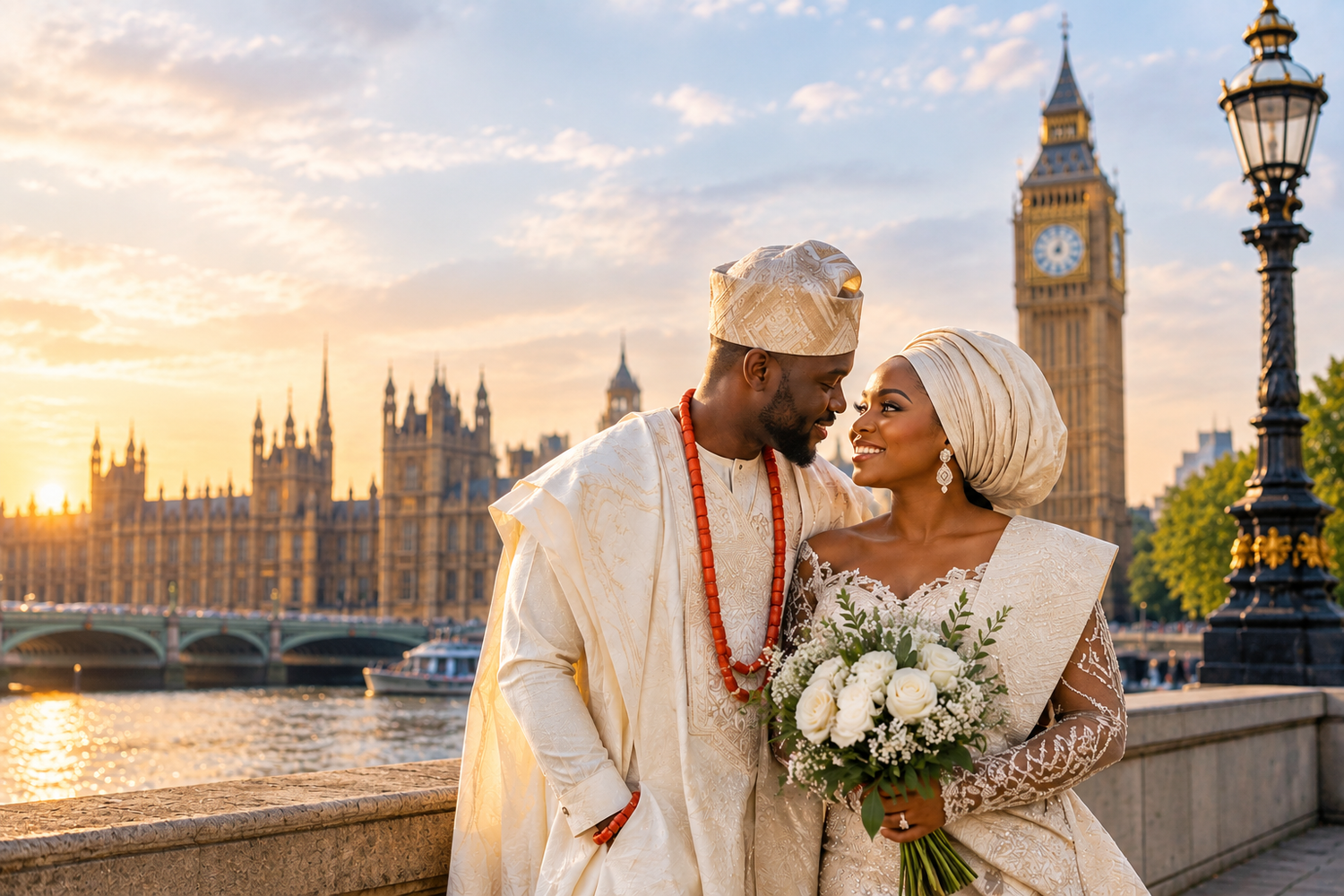
At Cameraboss, this is the philosophy behind everything we make. The work we brought home from Joanna and Jonathon’s Anglo-Nigerian celebration at Beamish Hall — or from Lanre and Beauty’s Yoruba white wedding in London — is editorial in its eye and documentary in its soul. Neither compromises the other.
What This Means for Couples Booking in 2026 and Beyond
The anti-trend era is, at its core, a buyers' market moment. As photographers shed the easy shorthand of preset identities and lean into genuine style, the difference between a good photographer and an exceptional one is becoming clearer. The visual language is less noisy. The conversations are deeper. Couples who are engaged in this shift are making better bookings, and getting more from them.
A few practical things to carry into your photographer search right now:
- Prioritise full galleries over highlight reels. A highlight reel is curated. A full gallery tells you what a photographer's average moment looks like — which is what your wedding day will mostly consist of.
- Ask about editing philosophy explicitly. Any serious photographer in 2026 should be able to describe their colour approach clearly. Vague answers suggest they're still led by the preset rather than the image.
- Look for cultural fluency, not just photographic skill. For Nigerian, African, and multicultural weddings, the photographer needs to understand what they're looking at. A culturally fluent eye doesn't just see a moment — it anticipates it. Read our notes on how to choose a wedding photographer as a Nigerian or African couple for more on this.
- Think decades, not Instagram. The photographs from your wedding will be shared with your grandchildren. That is a longer timeframe than any social media trend. Invest accordingly.
Where Cameraboss Stands
We have always occupied a particular position in UK wedding photography: cinematic in eye, documentary in practice, and deeply rooted in the cultural specificity of the communities we serve. The anti-trend moment feels less like a shift for us and more like a confirmation.
The work we are proudest of has never been defined by its editing style. It has been defined by what it captured: the private terror before the processional, the elder who pressed their forehead to the bride's and said nothing for three seconds, the moment a groom's composure finally broke. These are the images people call us years later to say they still keep by the bed.
That is the standard we hold ourselves to. Not the trend of the season, but the image that endures.
See our full portfolio and recent weddings at the Cameraboss blog, or watch our cinematic films at our wedding videos page. And if you're a photographer who wants to talk craft, technique, or the business of shooting cultural weddings — we run photography masterclasses too. Find out more at Cameraboss Classes.
Follow the Work, Not the Trend
If this resonates with what you’re looking for in a wedding photographer — or simply in how you want your day remembered — we’d love to connect. Browse our recent work, watch our films, or follow us on Instagram to see what documentary-editorial photography looks like when it’s made for the most important day of your life.