A winter proposal has everything a photographer loves: warm lights against cold air, low golden sun, and two people who are about to feel something enormous. It also has plenty that can go wrong. Daylight disappears by mid-afternoon, hands are in gloves, and a crowded Christmas market is a hard place to hide a photographer.
We photograph proposals and engagement shoots across the UK, and the proposals that come out best are almost always the ones that were planned in a few specific ways. This guide covers those, so the moment you've been building up to is captured properly and not just remembered as a blur.
Why Christmas and New Year proposals are so popular
The festive period is peak proposal season for good reasons. Families are together, couples have time off, and the setting does a lot of the emotional work for you. Many people also like the idea of starting the new year engaged.
From a photography point of view, winter also gives you something summer can't: atmosphere. Frost, lights, breath in cold air and warm window glow all add depth to a photograph without you doing anything.
Step 1: Plan around the light, not the clock
This is the biggest practical difference between a summer and a winter proposal. In late December in the UK, the sun sets at around 4pm, and the best soft light is usually in the hour or so before that.
Aim for early afternoon to sunset. A proposal at 2:30 to 3:30pm often gives you gentle low sun and still leaves time for photographs afterwards.
Check the exact sunset time for your location and date. It shifts through December and varies between Cornwall and Scotland.
Evening proposals work too, but only if you choose somewhere with its own lighting, such as festive lights, a lit bridge, a hotel entrance or a lit garden. Ask your photographer how they'll handle low light before you commit.
If you want both daylight and festive lights, the golden window is the last 45 minutes of daylight into early dusk. Colour in the sky and the first lights switching on can happen together.
Step 2: Choose a location that works for the surprise and the photographs
A location that looks lovely is not the same as one that is practical to photograph a surprise in. The best settings share a few features:
A natural place for the question. A bridge, a bench, a viewpoint or a quiet corner gives you a clear spot to stop.
A place your photographer can watch from a distance. Open parks, riverside paths and gardens work well because a photographer can use a longer lens from far away.
Somewhere meaningful to you both. Where you had your first date, a favourite walk or a place you travelled to together will beat a famous landmark every time.
A plan B for weather. Rain, wind and freezing temperatures are all possible in December and January.
Popular festive settings include Christmas markets, illuminated gardens, city skylines at dusk, frosty parks and historic hotels. We've written location guides for several cities that include quiet alternatives to the busiest spots, including 10 places to propose in Central London and 10 places to propose in Leicester.
A note on permissions: Some parks, gardens, markets and private venues have rules about professional photography, and some ask for permission or charge a fee. Check before the day. It's far better to find out in advance than to be asked to leave halfway through your proposal.
Step 3: Hide your photographer without spoiling the surprise
This is the part most people worry about. It's easier than it sounds when you plan it properly.
Brief your photographer on the exact spot and the route you'll take to reach it.
Agree a signal. A text when you leave, when you're five minutes away, and when you're in place keeps everyone in sync without suspicion.
Plan where they'll stand. A longer lens lets them stay far enough away to be invisible, and in a busy festive crowd a photographer simply looks like another visitor with a camera.
Have a cover story ready if your partner notices someone. "They must be photographing the lights" works more often than you'd think.
Decide the flow after the question. Most people want the photographer to step in for a few minutes of portraits once the surprise is out.
If you'd prefer the moment to feel completely unobserved, tell your photographer. We can capture the proposal from a distance and then reveal ourselves afterwards.
Step 4: Dress for the cold and for the camera
The photographs will be kept for years, so think about what you'll both be wearing.
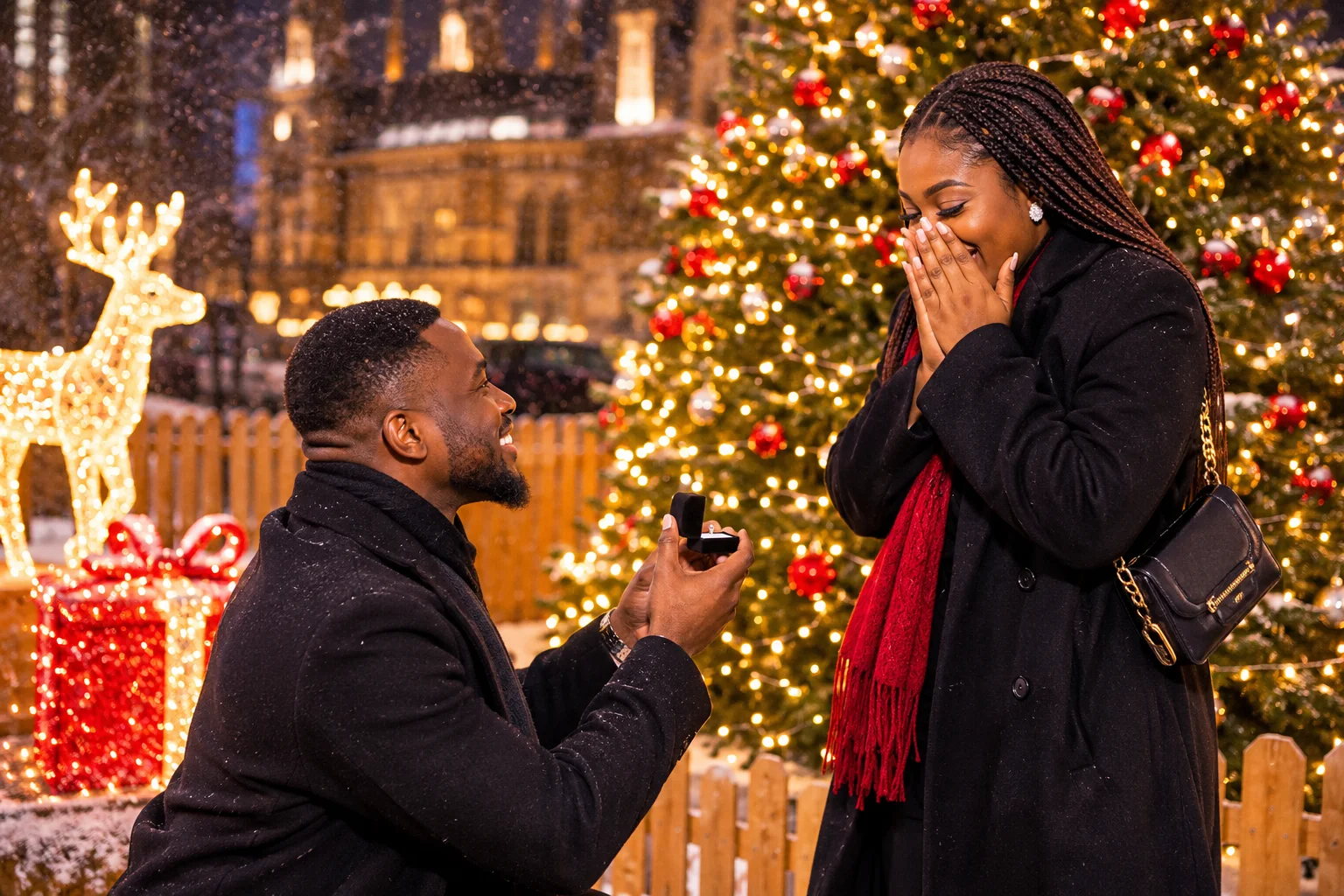
Coats and scarves can look great, but choose colours that suit the setting. A deep red scarf against a winter background photographs beautifully.
Think about hands. If a ring will be shown, gloves will be coming off. Consider a warm pair that's easy to remove.
Bring something warm for afterwards. Cold, shaky hands and a red nose are very human, but a hot drink after the portraits goes a long way.
Avoid very busy patterns if you want the photographs to feel timeless.
For more on dressing and planning for winter shoots, see our guide to winter wedding portrait tips in the UK.
Step 5: Capture the moment, then the aftermath
A good proposal gallery tells the whole story, not just the question itself. Ask your photographer to capture:
The approach. Walking together, the nerves in your face, and the small details that tell the story of the day.
The question. Wide shots for context and tighter shots for expression.
The reaction. Often the best photographs come from the seconds after "yes": laughing, crying, hugging.
The ring. A close-up of the ring on her hand, or his, is a photograph most couples treasure.
The quiet portraits afterwards. Once the surprise settles, a short session of relaxed portraits gives you lasting images of the day you got engaged.
Calls to family. If you're planning to ring or video call family straight away, tell your photographer. These are lovely moments to include.
Step 6: Think about what comes next
Many couples who propose over Christmas begin planning their wedding in January, and the new year is one of the busiest times for wedding enquiries. If you're thinking about a 2027 or 2028 date, it's worth looking at venues and photographers early, because popular dates book up well ahead.
A proposal shoot is also a lovely way to get to know a photographer before you commit. You'll find out how comfortable you feel in front of their camera, and that makes the decision about your wedding photography much easier. If you'd like to see how it works, take a look at our pricing or get in touch to check availability.
A simple checklist for your Christmas or New Year proposal
Choose a date and check the sunset time
Pick a location that is meaningful and practical to photograph
Check permissions and any photography rules at the venue
Book your photographer and share the exact spot and route
Agree signals and a cover story
Plan for weather with an indoor or sheltered back-up
Organise the ring, warm clothing and a post-proposal plan
Decide whether you want portraits straight afterwards
Final thoughts
A proposal only happens once. With a little planning around light, location and timing, a Christmas or New Year proposal can be photographed beautifully, and you'll have images that capture not just the moment, but how it felt.
If you're planning a surprise proposal anywhere in the UK, we'd love to help you capture it. Get in touch with your date and location.
FAQs
What time of day is best for a winter proposal?
Usually early to mid afternoon. In late December the sun sets at around 4pm in much of the UK, so the hour or so before sunset gives soft, flattering light.
Can I hire a photographer for a surprise proposal?
Yes. Your photographer will plan the exact spot with you, stay at a distance and capture the moment without your partner noticing.
How long does a proposal photo session last?
The proposal itself is a few minutes. Many couples add 20 to 45 minutes of portraits afterwards, depending on the weather and the light.
What if it rains?
Plan a sheltered or indoor back-up, such as a covered walkway, hotel lobby or lit arcade, or agree a flexible date with your photographer.
Do I need permission to photograph in public places?
Some parks, gardens and venues have rules about professional photography. Check with the location before the day.