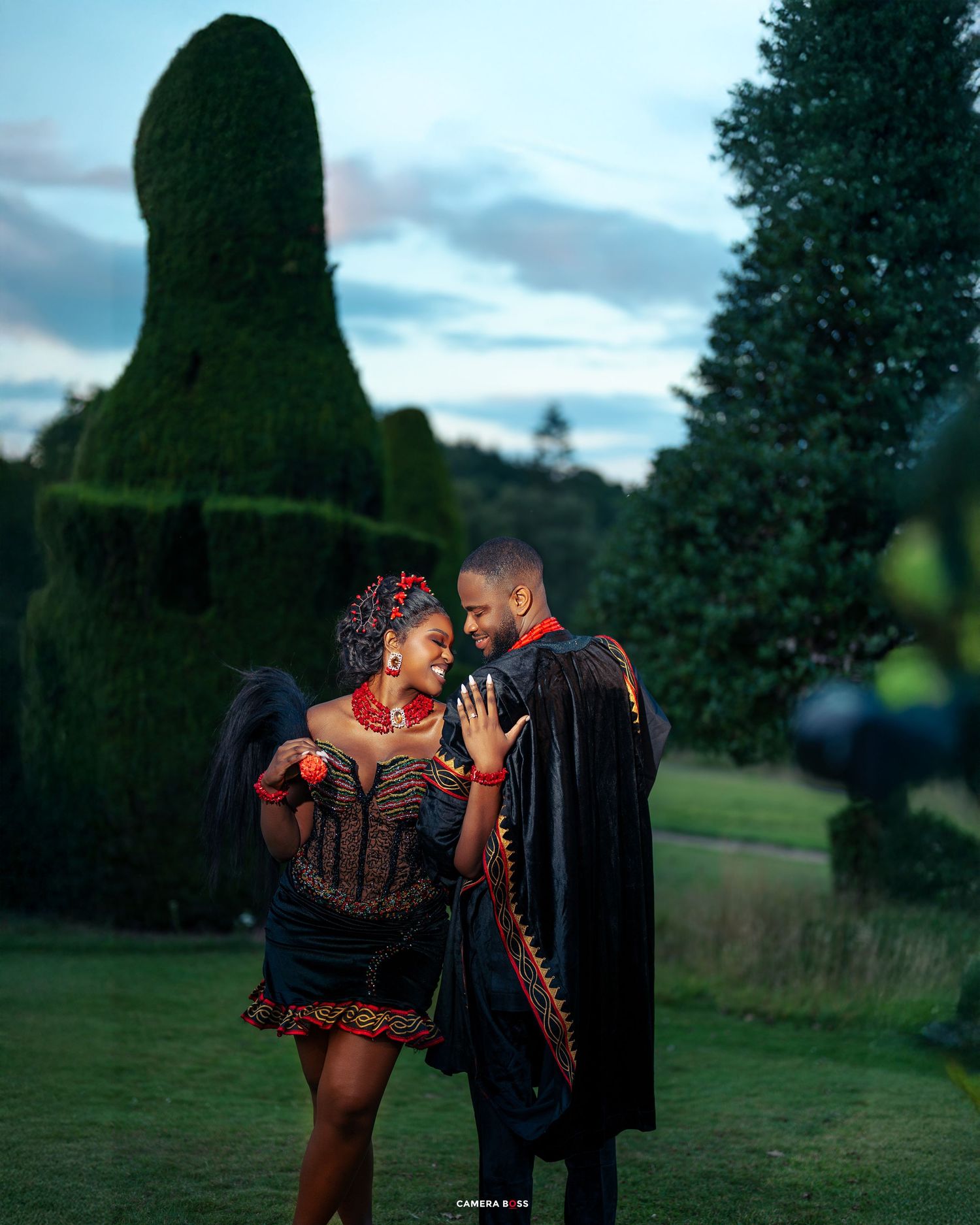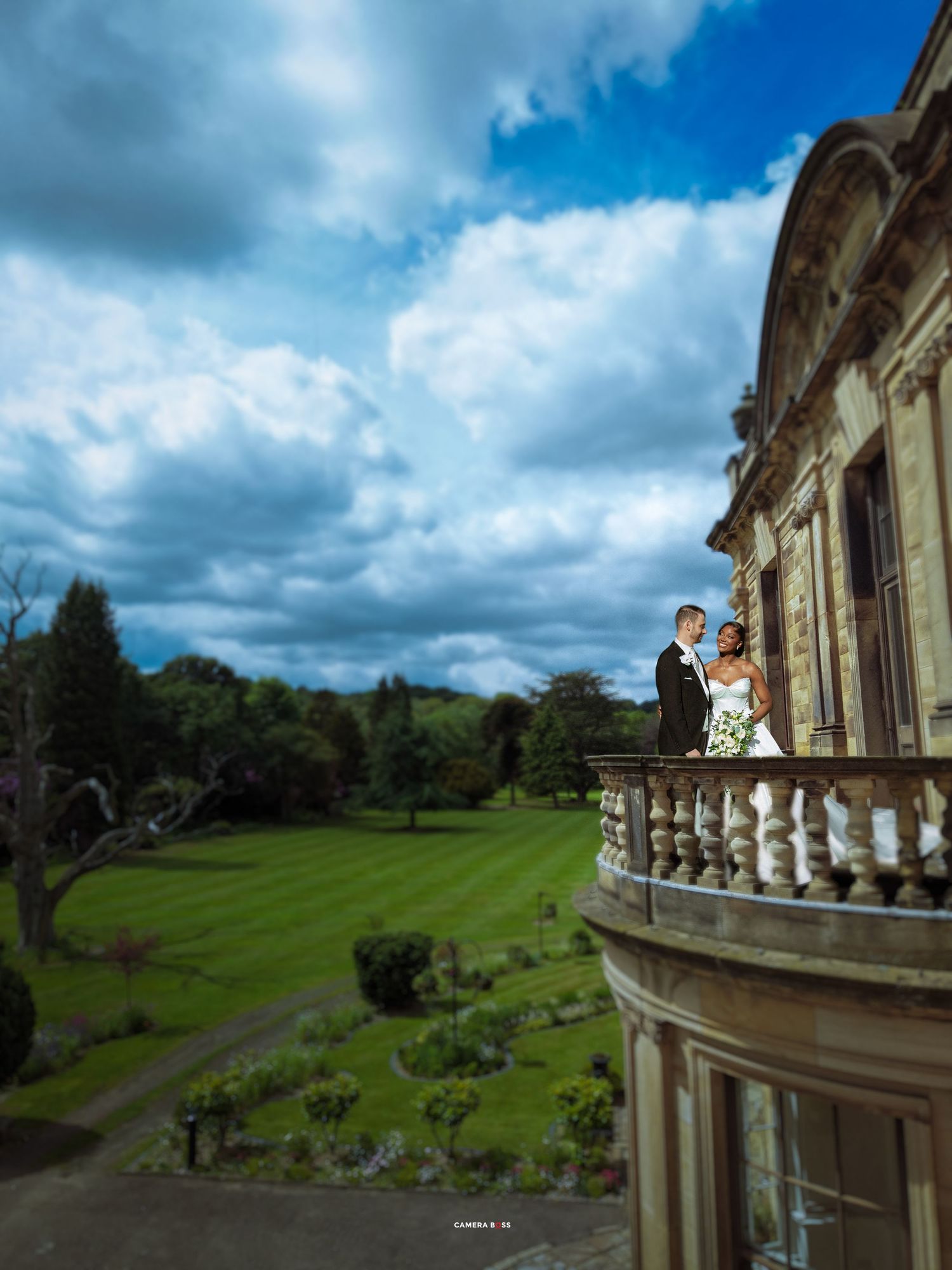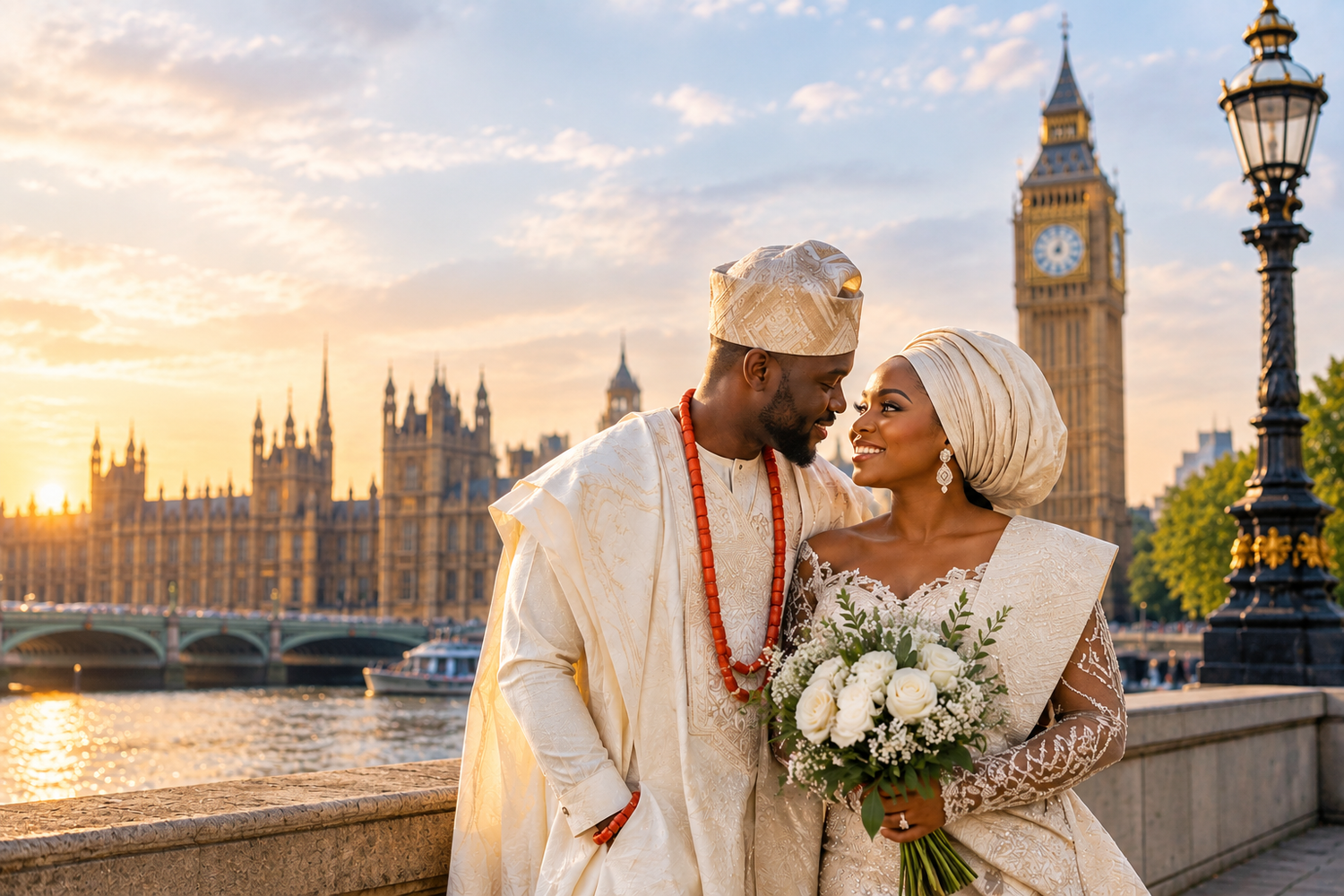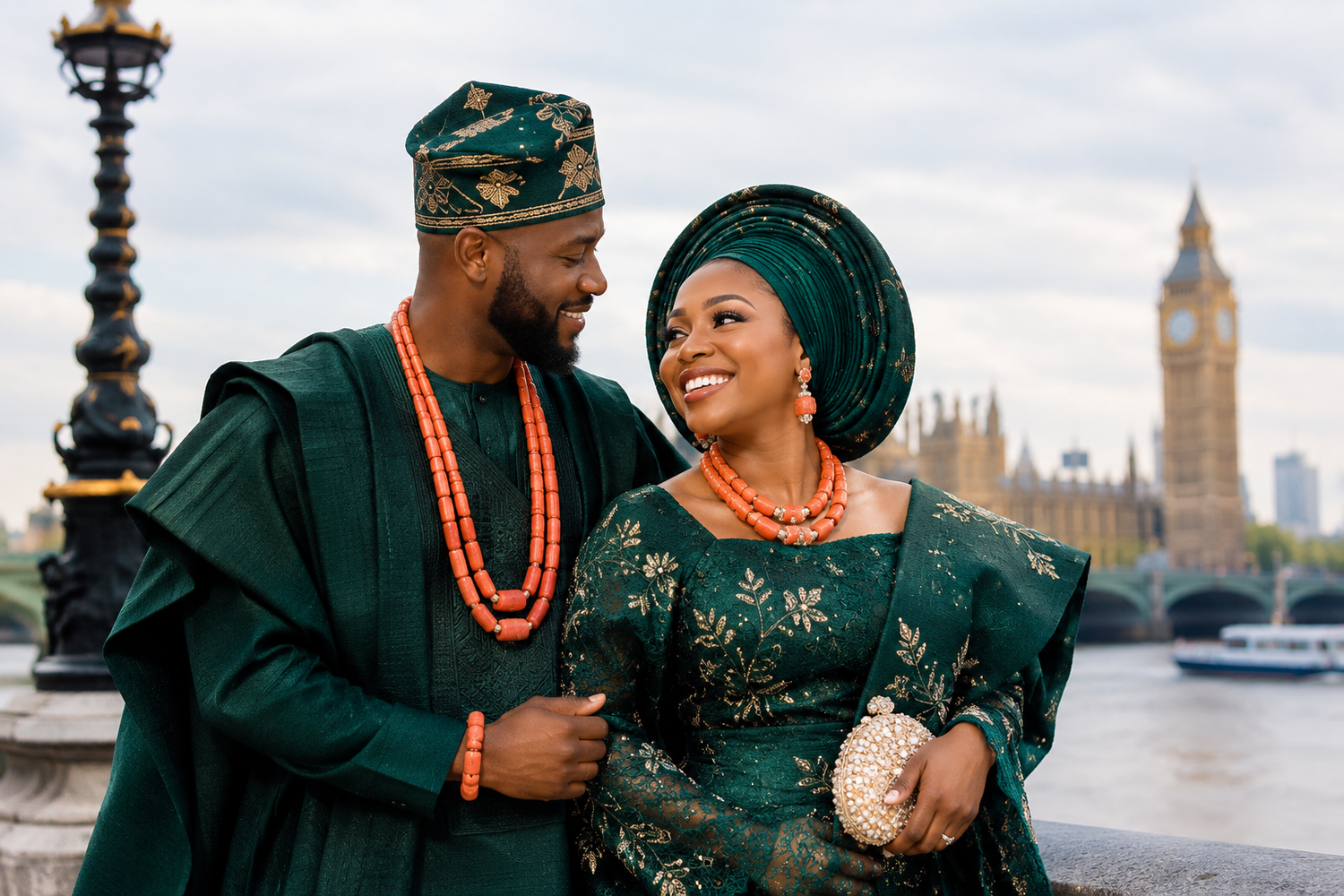
African and Nigerian weddings are filled with colour, culture, family, emotion and celebration. From traditional ceremonies and beautifully detailed outfits to large family gatherings, emotional moments and energetic receptions, every wedding has a story worth preserving. The challenge isn't usually finding a nice location — it's planning photography around a day that can involve multiple ceremonies, outfit changes, venues and hundreds of guests.
This guide focuses on how to plan that kind of day. If you're looking for specific outdoor photo spots and backdrops by city instead, see our locations guide.
How Many Ceremonies Will Your Day Involve?
Most African and Nigerian weddings in the UK aren't a single event — they're two or three. A traditional introduction or engagement ceremony, a church or civil ceremony, and a reception, sometimes across two different days entirely. Before booking a photographer, map out exactly which of these your celebration includes, because it changes almost everything else: how many hours of coverage you need, whether one photographer can realistically cover all of it, and how much travel time sits between each stage.
Couples who skip this step often end up with a photographer who's briefed for a single-ceremony British wedding, and gaps appear in the gallery where the traditional elements should be. Working through this early with your photographer — even a rough sketch of the day — avoids that.
Choosing a Venue That Can Actually Hold Your Ceremony
Traditional Nigerian and African ceremonies bring a different set of venue demands than a typical Western wedding: floor space for a large seated family audience, room for the couple and both families to move through formal proceedings, and often space for live music, drumming or a full band later in the day. Not every wedding venue is set up for this by default, even if it looks impressive in photos.
Cities like Birmingham and London have a strong cluster of halls and hotels experienced with this format specifically — venues that regularly host large multicultural weddings and know how a traditional ceremony is structured. Elsewhere, in cities like Coventry, Derby or Wolverhampton, couples more often lean on community halls or family-hosted spaces, which can work just as well but usually need more of the logistics worked out directly with the family rather than a venue coordinator.
Whichever route you take, ask a potential venue directly whether they've hosted a traditional introduction or Nigerian wedding before. Their answer tells you a lot about how smoothly the day will run.
Working With Vendors Who Understand Cultural Weddings
Catering, décor and even lighting all shift for a cultural wedding. Caterers need to handle traditional food service formats and portions for large family groups; décor often needs to work with Aso-Ebi colour schemes rather than against them; and a photographer needs to know how to expose for rich fabric colour and gele under a hall's typical lighting, which behaves very differently to natural outdoor light.
It's worth asking any vendor — not just your photographer — whether they've worked a Nigerian or African wedding before. A caterer or venue team without that experience isn't a dealbreaker, but it usually means you'll need to explain more of the day's structure yourself.
Scheduling a Multi-Stage Day Without It Feeling Rushed
The single biggest planning mistake we see is underestimating how long each stage actually takes. A traditional introduction alone often runs two to three hours once arrivals, formalities and family exchanges are factored in — and that's before a separate church service or reception even starts.
A few things that consistently help:
- Build real travel time between venues into the schedule, not the time Google Maps says
- Confirm outfit change windows in advance, especially if there's a change between traditional and Western attire
- Agree a rough order of events with your photographer so they know what's coming next without asking on the day
- Leave buffer time around the traditional ceremony specifically — it's the stage most likely to run long
Preparing Your Family Photo List
Large family weddings can mean dozens of group photo combinations — immediate family, extended family, both families together, specific relatives who've travelled a long way. Without a list agreed in advance, this becomes one of the most time-consuming parts of the day and eats into time that could go toward candid coverage instead.
A simple written list, shared with your photographer a week or two before the wedding, is usually enough. It also means whoever's coordinating the day can help gather people quickly rather than photography stalling while people are found.
Telling Your Photographer What Matters to You
Not every family follows every tradition the same way. Some couples want every stage of a traditional ceremony documented in detail; others care more about the reception and want the traditional element covered more lightly. Neither is wrong, but your photographer can only match it if you tell them directly — ideally with specifics, not just "we're having a traditional ceremony."
If you want a starting point for understanding what different ceremonies typically involve, Hitched's guide to Nigerian wedding traditions is a reasonable overview, though it's worth treating as general background rather than a guide to your own family's specific customs.
Where Couples Are Planning These Weddings
African and Nigerian communities are well established across the UK, and the venues and vendors available reflect that. London and Birmingham have the largest and most experienced pool of venues for large cultural weddings. Leicester, Manchester, Nottingham, Sheffield and Leeds all have a solid range of options too, with growing communities in Coventry, Derby, Wolverhampton and Bristol offering more flexible, often family-led alternatives. Wherever you're planning, the questions above matter more than which specific city you're in.
Why Choose CameraBoss for African & Nigerian Wedding Photography?
CameraBoss specialises in wedding, lifestyle and portrait photography, with a focus on creating a combination of documentary moments and creative portraits.
As a British-Nigerian photographer, John Lekan brings direct experience of both British and Nigerian wedding celebrations. This understanding can be particularly valuable for couples who want their wedding photography to reflect their culture while also capturing the individual personality of their celebration.
CameraBoss covers weddings across the UK and Nigeria, including London, Birmingham, Leicester, Manchester and other locations.
You can explore the CameraBoss wedding photography galleries to see examples of wedding coverage or visit the locations page to explore the areas covered.
Planning Checklist for Your Wedding Photography
Share your complete wedding schedule. If your wedding includes several ceremonies or locations, give your photographer the full timeline in advance. This makes it easier to plan coverage around every important part of the day.
Prepare a family photography list. Large family weddings can involve many group photographs. A simple list of essential combinations can make this process quicker and more organised.
Explain important cultural traditions. Let your photographer know which ceremonies, outfits and traditions are particularly meaningful to you. This allows them to prepare for moments that might not be obvious to someone unfamiliar with your family's traditions.
Allow time for couple portraits. Even with a busy wedding schedule, setting aside some time for portraits gives you the opportunity to create photographs away from the main celebrations.
Leave room for candid photography. Some of the most memorable photographs happen naturally between planned events. Allowing your photographer to document these interactions can add depth to your wedding gallery.
Common Questions
A: Most run two to three hours including arrivals, formalities and family exchanges. Confirming the expected format with your family in advance helps your photographer plan coverage accurately.
A: Many couples do — it gives continuity across the day and means you're only briefing one team on your family and traditions. Just factor in travel time between venues.
A: Full-day coverage across preparations, ceremonies and reception is common — often eight hours or more when multiple stages are involved. Your specific schedule determines what's realistic.
A: Flag any ceremonies, outfit changes or customs that matter to you, even ones that seem minor. A photographer unfamiliar with your specific traditions won't know to anticipate them otherwise.
A: Yes. CameraBoss regularly travels across the UK and Nigeria for weddings and engagement shoots. You can view the areas covered for more information.
Planning an African or Nigerian Wedding in the UK?
Tell us about your ceremony structure and the traditions you want documented, and we'll help you plan photography coverage around your day.