Analogue film photography uses physical rolls that are developed and scanned by a laboratory. Some couples like its colour and grain, and want a small part of their wedding photographed that way. It also brings material costs, a slower pace and a wait for processing. For a 2026 wedding, decide which photographs you want on film before paying for an addition to the coverage.
Wedding video and photographic film
The phrase wedding film can mean a moving image production or still photographs made on analogue film. Check which product a supplier is describing when you enquire.
A wedding video can include a short highlights edit, documentary coverage and speeches with sound. It needs its own equipment and crew. Bridebook's 2026 figures put the average UK wedding videographer at £1,514 and suggest that roughly one third of couples book one. Our wedding videography page shows this kind of work.
Photographic film produces still images on negatives, commonly using 35mm or 120 medium format rolls. They go to a lab for development and scanning. A film camera generally has no screen on which to review the photograph immediately, so the workflow differs from digital coverage.
A digital photograph can also be edited with a Lightroom preset to resemble film. If you specifically want analogue photographs, ask which stock and laboratory the photographer uses. That distinction helps you understand what the quote covers and how the finished images will be produced.
Film costs for a wedding in 2026
Film prices rose roughly 9% between February 2025 and early 2026 in the figures quoted here. Silver more than doubled during 2025 and reached a reported price above $120 an ounce in January 2026. Reduced manufacturing capacity following the digital transition also affects supply. Check current stock prices before using earlier figures to calculate a wedding budget.
For mid 2026, the quoted UK starting price for Kodak Portra 400 is around £23 a roll. An overseas five pack example works out at about $17.85 per roll, compared with under $14 in 2023. Kodak's Ektacolor Pro name is also associated with the emulsion from March 2026. Processing and scanning examples include about $19 per roll in the US and €10 in the euro zone, with sample combined quotes around $32. These are different markets, so obtain a complete stock, development and scan quote from the lab you will use.
The number of rolls depends on the format and how much of the wedding will be photographed on film. These examples show why even a small selection has a material cost.
- A photographer using film throughout the day might work through ten to fifteen rolls. A smaller film addition would need fewer, so agree the intended coverage first.
- A 35mm roll gives 36 frames. A 120 roll in 645 format gives 16; in 6x7 format it gives ten. Ask which format the photographer plans to use.
- Twelve rolls of medium format would produce around 190 exposures. That is a limited set from which to select the finished photographs.
- At an illustrative £25 to £30 per roll including processing, twelve rolls cost £300 to £360 in materials and lab work before the photographer's time.
The quoted UK photography average of £1,484 is useful context, while film inclusive packages can start around £3,500. Film adds consumables, slower shooting and laboratory costs, so compare the exact coverage included. For CameraBoss coverage, see current pricing and contact us about your plans.
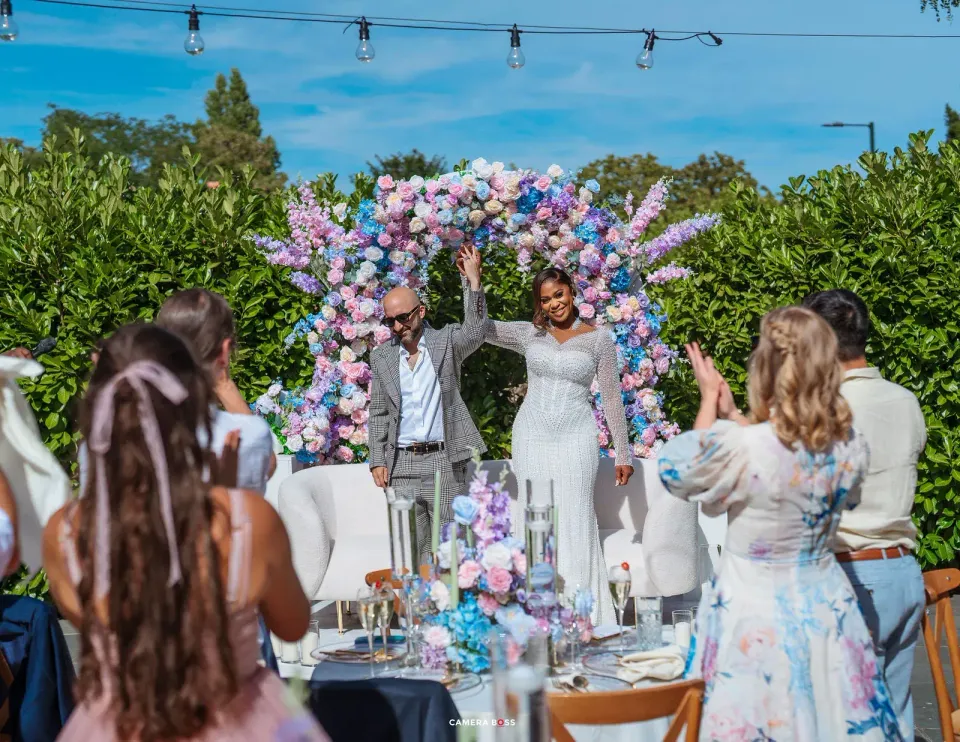
The appearance and limits of film
Colour, highlight rendering and grain are the main reasons couples choose film. Look at complete examples from the stock and lab the photographer intends to use, since both affect the result.
Colour negative film can retain a gentle transition in bright highlights, while overexposing a digital white dress may lose lace detail. Portra can tolerate a stop or two of extra exposure, and photographers often rate ISO 400 stock at 200. Film grain also has a different texture from digital noise. The emulsion influences the colour, though scanning and editing still affect how consistent the finished set looks across different light.
The practical limits are worth discussing alongside the photographs you like. Find out how the photographer will handle each of these situations at your wedding.
- There is no immediate image review on the back of the camera. A metering or focus error may become apparent only when the scans return, perhaps a fortnight later.
- Low light can be difficult with colour negative stocks around ISO 800. A dim church or candlelit first dance may be better suited to the digital part of the coverage.
- A medium format body may take roughly one frame every two seconds. Confetti can move much faster, so discuss how that moment will be recorded.
- Film travels to the lab for development and scanning before editing can begin. Allow an illustrative one to three weeks for that stage, and confirm the actual turnaround.
- A light leak, incorrectly loaded roll or processing error can damage photographs permanently. The negative has no duplicate digital file from which to recover those frames.
Digital coverage alongside film can reduce the risk of relying on one roll for an important moment. Ask which events will have that additional coverage.
Combining analogue and digital coverage
Hybrid coverage lets a photographer use digital cameras for most of the day and film for selected scenes. Agree which photographs are intended for each format, rather than assume every event will be covered twice.
Digital is useful for fast events and darker conditions, including confetti, speeches and dancing. Film can be used more deliberately for preparation details by a window, an afternoon portrait session or family groups. Quiet reception scenes before the light drops can also suit it. The choice should follow the pace and light of your day.
Typical medium format cameras include the Contax 645 and Pentax 645N. A lighter 35mm body may be used for a looser observational approach. Our equipment page has more information about the cameras and lenses used in our work.
A ten hour digital wedding may produce 3,000 to 5,000 raw frames, followed by twenty to thirty hours of selection and editing. The film portion might contain only 150 frames. At around £1.85 per exposure in this example, each photograph needs to be considered carefully. There will be fewer frames, and the quality of the selection matters more than the total.
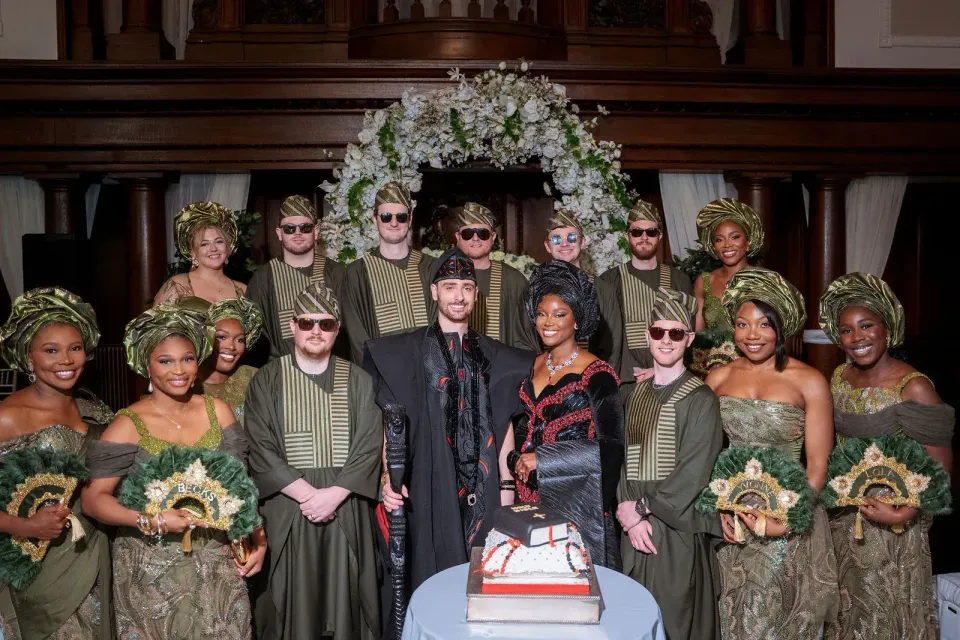
Film colour and darker skin tones
Ask to see film photographs of people with skin tones similar to yours. Development and scanning choices can affect colour and shadow detail, even when the exposure is sound.
Colour film and laboratory reference cards were historically balanced around pale skin. Modern Portra has improved, but a scan still involves decisions about colour balance. Brown or dark skin can look grey, ashy or green if those decisions are made without checking the person in the frame.
A photographer may rate Portra 400 at 200 or 160 and meter for the face to preserve detail in the skin. Reference frames and a clear brief help the lab understand the intended colour. Working consistently with a lab and scanner operator makes corrections easier to carry between jobs. Where necessary, compare the scan with the negative on a light table instead of judging only a JPEG.
I am John Lekan, a British Nigerian photographer working in luxury and documentary weddings, and Creative Photographer of the Year at the Creative Industry Awards 2024. CameraBoss works between Leicester and London with Black, South Asian and mixed heritage couples. Accurate skin colour matters throughout the coverage, whatever camera is used. Our wedding galleries let you assess that work.
Deciding how much film to include
Work from the look you like, the light available and the parts of the wedding you want covered. Those choices make it easier to judge whether film fits the budget.
Film can suit you if you can point to examples you like, have daylight available for portraits and would value forty carefully chosen photographs alongside the wider gallery. Make sure there is room in the budget to add it without reducing coverage you otherwise need.
A dark indoor ceremony and reception give film less scope. It may also be unsuitable if you want extensive candid photographs of every guest or need images within a fortnight. Compare the cost with other priorities: removing the last two hours of your reception coverage could mean losing events you wanted recorded.
One option is four to six rolls for portraits and preparation details, photographed alongside a full digital commission. Confirm how scans and negatives will be supplied. Film can also suit an editorial session before the wedding, where there is more time to work slowly and choose the light.
Make the decision while planning the timetable. Film portraits may need longer and a suitable daylight window. Contact us with your venue and schedule if you want to discuss where analogue coverage could fit.
Common questions
Is film photography the same as wedding video?Film photography makes still pictures on physical rolls. Wedding video records movement and sound. A studio may provide both, but ask for separate descriptions of the work and what each part of the quote includes.
What might adding film cost?Four to six rolls can add a few hundred pounds in materials and lab charges before time is included. Film inclusive UK packages are quoted from around £3,500 in this guide, compared with a photography average of £1,484. Ask for the actual number of rolls and lab services in your quote.
How many analogue photographs would we receive?Twelve rolls of medium format give roughly 190 exposures before selection. Film is usually used for a smaller set of photographs, so confirm the intended finished selection alongside the wider coverage.
What happens if a roll is damaged?The affected images may be lost because there is no backup file for that negative. Ask how digital coverage will support the film work, particularly during the ceremony and other events that cannot be repeated.
Can we keep the negatives?Ask before booking whether negatives are included, when they will be returned after scanning and how to store them. A negative kept in good condition can remain useful for future scans. Confirm the photographer's arrangements in writing.
Discuss film for your wedding
Tell us your venue, timings and the film photographs you are drawn to. We can discuss which parts of the day would suit analogue coverage and what needs to be included in a quote.