There are thousands of wedding photographers working in the UK, and from the outside a great many of them look identical: similar galleries, similar language, similarly warm Instagram grids. The difference between them is real and significant — it just isn't visible on a homepage. This guide breaks down the four working styles, what each realistically costs in 2026, and the handful of questions that separate a comfortable booking from an expensive regret.
Wedding Photographers: How to Choose the Right One for Your Day
The Four Kinds of Wedding Photographers
Almost every photographer you'll meet falls somewhere across four broad approaches. Most blend two. Knowing which blend you want will narrow a list of forty names to a list of six faster than any other filter.
Documentary (or reportage)
The photographer observes and rarely directs. You get the day as it genuinely happened — the mother-in-law crying during the speeches, the best man's third attempt at the buttonhole. Fewer perfect group shots, far more truth. This is the dominant style among UK photographers under 45 and it suits couples who dislike being posed.
Editorial (or fine art)
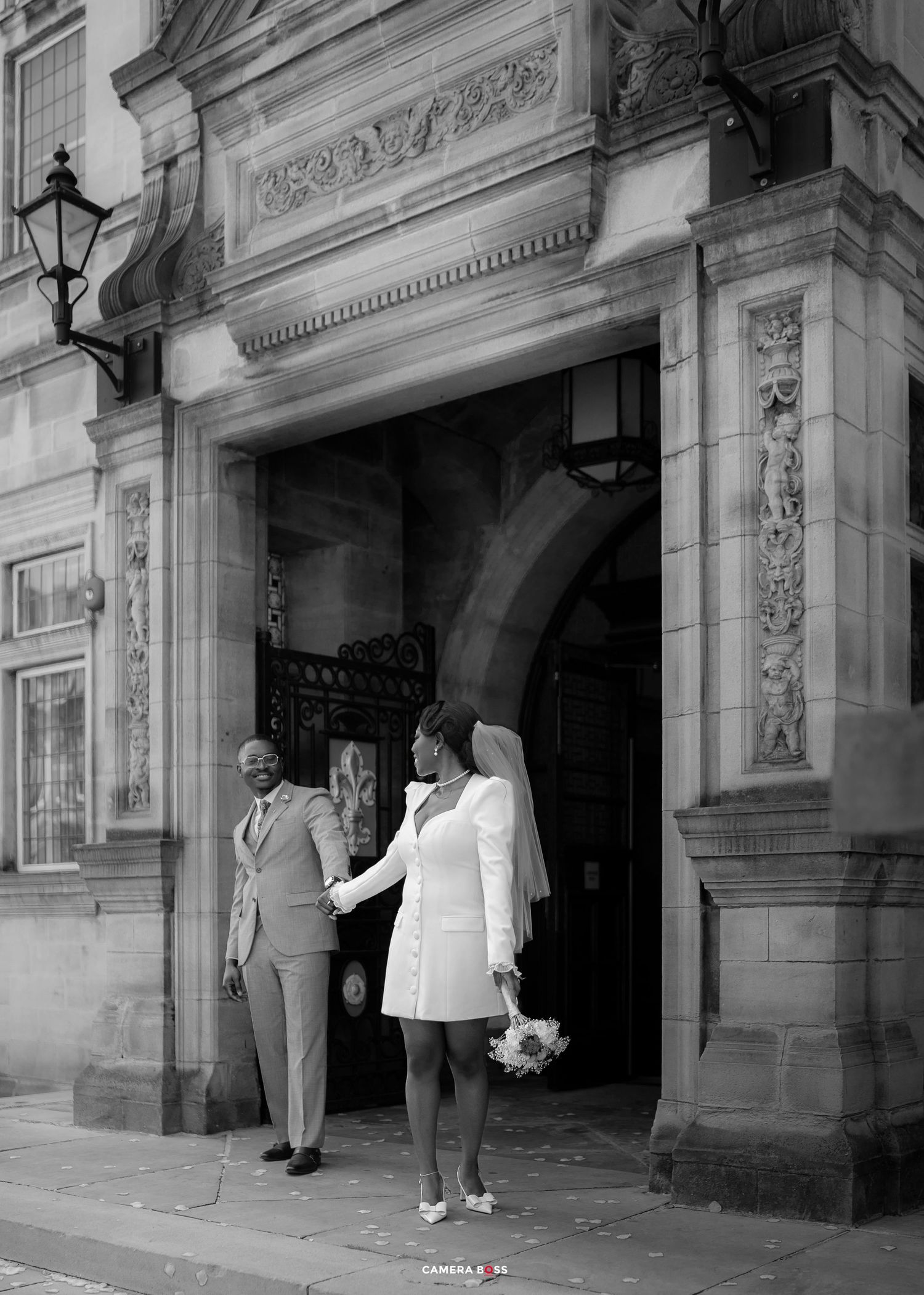
Deliberate, styled, magazine-influenced. Light is shaped rather than found, and portraits are constructed with care. It produces the images couples frame and enlarge. It also requires you to give up 30–60 minutes of your day, which some couples resent and others treasure.
Traditional
Structured, formal, group-shot-led. Frequently undervalued by younger couples and deeply valued by parents and grandparents. If your family expects a proper line-up of everyone, someone has to be competent at it.
Cinematic / luxury hybrid
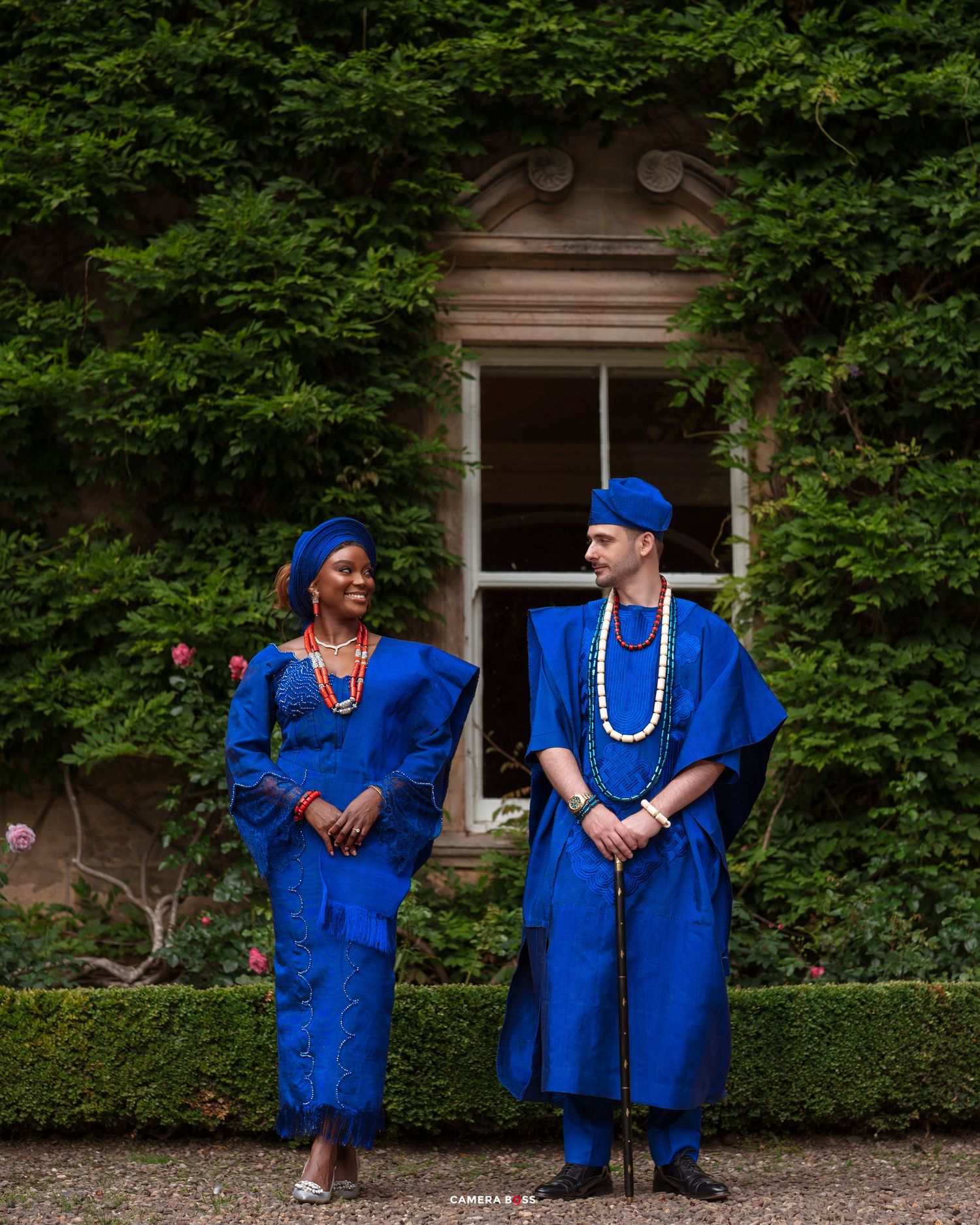
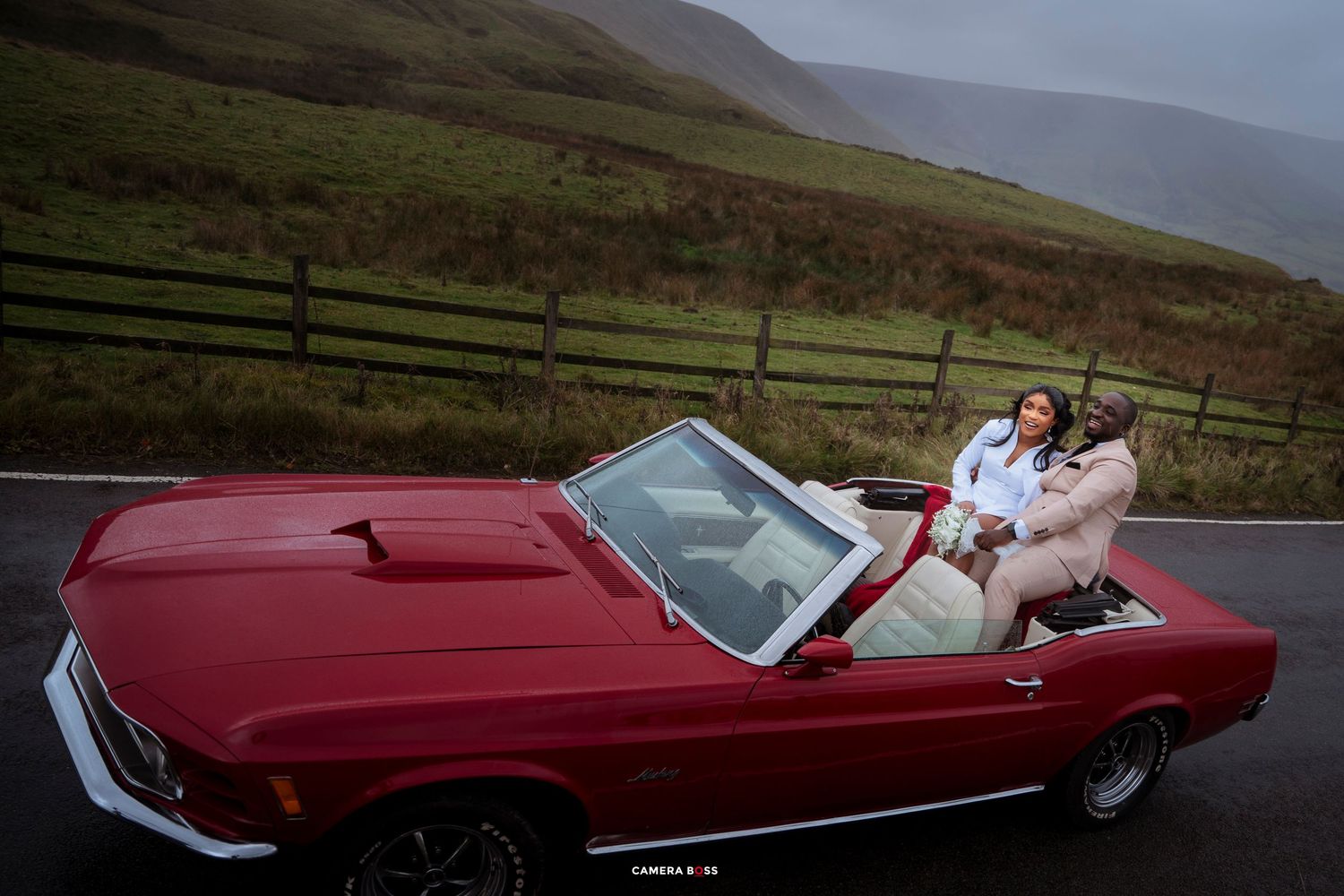
A blend of documentary coverage with editorial set-pieces, usually supported by a second shooter and lighting, and often paired with film. This is where most award-winning UK work sits, and it's where Cameraboss operates — documentary honesty for the day itself, editorial ambition for the portraits.
A useful exercise before you contact anyone: scroll your own camera roll and notice which wedding pictures you've saved from friends' weddings over the past two years. Almost every couple discovers a clear preference they'd never articulated. If you've saved candid laughter and nobody looking at the lens, you want documentary. If you've saved the still, composed portrait of the couple alone against a wall of light, you want editorial. Naming the preference before you start looking will save you a fortnight.
What Wedding Photographers Actually Cost in the UK in 2026
Real numbers, because vagueness here helps nobody. Bridebook's 2026 report puts the average UK wedding photographer cost at £1,484; Hitched's National Wedding Survey puts it nearer £1,590. Full-day coverage from established professionals typically runs £1,600–£3,000, and most couples land between £1,400 and £1,800. London and the South East sit 20–25% above the national figure — expect £200–£500 more for equivalent coverage.
Set that against a total average UK wedding of £20,604–£21,990 and photography represents roughly 7–8% of the budget. It's also the only supplier whose product you'll still be handling in thirty years.
Three things reliably move the price:
- Hours. Eight hours versus twelve is the single biggest lever. Coverage that stops before the first dance is materially cheaper — and materially less complete.
- Second shooter. Adds roughly £300–£600 and buys you simultaneous coverage of both preparations, plus reaction shots during the vows that a solo photographer physically cannot get.
- Season and day. Peak season runs May to September. Marrying between October and April typically saves 10–15%, and a Friday or Sunday can save more again.
What's usually not included in a mid-range package: a physical album, a second shooter, or an engagement shoot. Check all three before comparing two quotes, because a £1,400 package and a £2,100 package are frequently the same photographer offering different amounts of the same thing.
The Portfolio Trap: How to Read a Photographer's Work Properly
Here's the uncomfortable truth about portfolios. A photographer with sixty weddings behind them is showing you their best forty frames from all sixty. That's a hit rate of well under one percent, and it tells you almost nothing about what your gallery will look like.
So ask for a full wedding, start to finish. One complete gallery, ideally from a venue and season resembling yours. What you're looking for is consistency: are the images at 7pm as strong as the ones at 2pm? Does the quality hold when the sun goes and the DJ's lights come on? Is the whole family photographed, or only the photogenic third of it?
Watch specifically for these:
- Skin tones. Are darker skin tones rendered richly and accurately, or crushed and grey? This is a technical competence, not a preference, and a great many portfolios quietly fail it.
- Indoor and evening work. Anyone can produce something lovely in golden hour on a lawn. British weather means roughly half of UK weddings won't get one.
- Guests, not just the couple. A gallery where only the bride and groom appear is a gallery your parents will find disappointing.
- Recency. Styles shift. Check the dates on the work you're being shown.
There's a second, subtler trap worth naming: the Instagram grid. A grid is arranged for visual rhythm, not for evidence. Nine beautiful squares from nine different weddings tell you a photographer has good taste in cropping. They tell you nothing about whether the couple in square four received four hundred images of that standard or four. Treat social media as an introduction and the full gallery as the interview.
You can view our own recent galleries in the client area and our editorial work on the editorial shoot page.
What Separates Good Wedding Photographers from Great Ones
Technical skill is the entry ticket, not the differentiator. By the time someone has photographed thirty weddings, they can expose a frame correctly. What distinguishes the photographers couples recommend for a decade afterwards is anticipation, temperament and fluency.
Anticipation is knowing that the groom's father will reach for his handkerchief eight seconds before he does. Temperament is being able to hold a room of 80 guests for a group shot without becoming the loudest person at the wedding. Fluency is understanding the specific grammar of your ceremony.
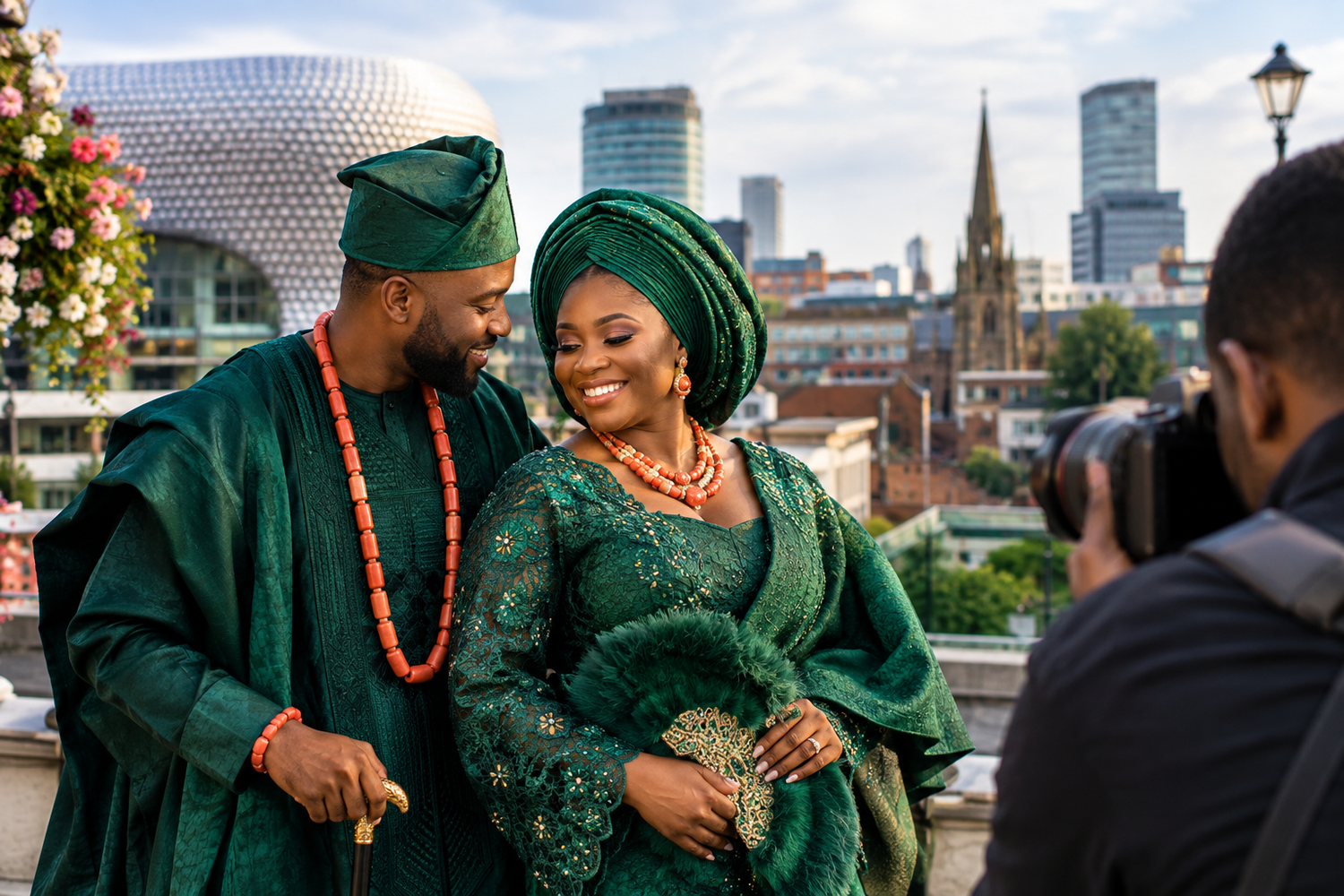
That last one is where Cameraboss has built its reputation. I'm John Lekan — a British-Nigerian luxury and documentary wedding photographer with over ten years of experience, named Creative Photographer of the Year at the Creative Industry Awards 2024. Across weddings in London, Leicester, Manchester, Birmingham, Newcastle and beyond, a great many of the days we photograph are multicultural: Yoruba traditional engagements, nikkahs, Nigerian-British two-day celebrations, ceremonies where the rhythm of the afternoon has nothing to do with a standard British running order.
A photographer who has to ask what happens next has already missed it.
Knowing that the aso-oke needs photographing before the ceremony rather than after it, that the money spray is a highlight and not an interruption, that greeting the elders follows a sequence worth documenting properly — none of that is learnable on the morning. It's why we invest in it, and it's why couples plan around our availability rather than the other way around. You can read more about how we work on our experience page.
Your Enquiry, Your Contract, Your Peace of Mind
When you're down to a shortlist of three, the process becomes practical. Most UK couples book photography 9–18 months ahead, with peak summer Saturdays going 18–24 months out, so don't linger once you've decided.
Send each of your three the same brief: date, venue, ceremony type, rough guest count, budget range, and what matters most to you photographically. Then compare like with like on:
- Coverage hours and exactly when they start and stop.
- Delivery timescale — 4–8 weeks is standard; anything past 12 deserves a question.
- Image count, and whether they're fully edited or lightly corrected.
- Backup equipment and dual card slots — non-negotiable for a day that can't be repeated.
- Illness and emergency cover, including who steps in and how.
- Postponement terms, which the last few years have taught every couple to read carefully.
Two further points that couples routinely forget. First, ask who is actually turning up. Some studios book under a founder's name and dispatch an associate; that can be perfectly good, but you should know it in advance and see that specific person's work. Second, ask about print and album rights. With the average UK wedding now costing £20,604 and photography around 7–8% of it, discovering afterwards that a printed album sits outside your package is an avoidable disappointment.
Then have a conversation. You'll spend eight to twelve hours beside this person on the most photographed day of your life. If the call is warm and easy, that ease will be visible in your portraits. If it isn't, no portfolio will rescue it. Our packages and inclusions are laid out on the pricing page, and past couples describe the experience in their own words on our testimonials page.
Common Questions
A: Between £1,400 and £1,800 covers the national average, with full-day coverage from established photographers typically £1,600–£3,000. Add 20–25% for London and the South East, and expect roughly 7–8% of a total wedding budget to go on photography.
A: Not always, but it matters if both parties are getting ready separately, if your guest count is above about 120, or if you want reaction shots during the vows. It usually adds £300–£600 and is one of the better value upgrades available.
A: Four to eight weeks is the UK standard for a full gallery, with a preview set within a week or two. Anything beyond twelve weeks should be clearly explained in the contract before you sign.
A: Booking from a highlights reel without ever seeing a complete wedding gallery. Highlights show a photographer's ceiling; a full gallery shows their floor — and your wedding will be an average day, not their best one.
A: Regularly, and it's central to what we do. Cameraboss specialises in Nigerian, Yoruba and blended British-African weddings — the traditional engagement, the aso-ebi, the owambe and the white wedding — alongside contemporary British celebrations, across the UK and Nigeria. See the full coverage map.
Tell Us About Your Wedding
If you're weighing up photographers and would like an honest conversation about what your day actually needs, we're happy to have it — even if the answer isn't us. Share your date, your venue and your vision, and we'll come back with something tailored.