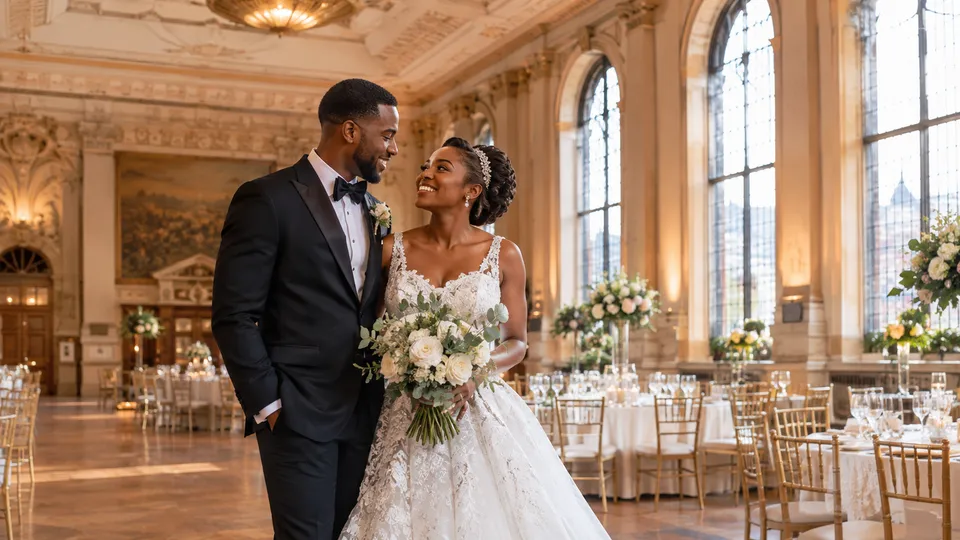
“Dry hire” is one of the quieter trends on the 2027 list, and one of the most practical. Bridebook's 2027 trend forecast reports that UK searches for “dry hire venue” reached 2,000 in June 2026, up 188% on the year before. Couples are looking for a space they can hire and then fill with their own caterer, bar and decor.
That matters if you have a large guest list, a specific cuisine or a family that already knows exactly who should cook. It also changes how the day runs, which is where photography comes in.
What dry hire actually means
Dry hire usually means you hire the building and bring in your own suppliers. The venue provides the space, and sometimes tables, chairs and basic facilities, but not the food or the bar. Definitions vary from venue to venue, so ask exactly what is included. Some venues are fully dry; others have an approved supplier list or charge a fee for outside caterers.
Why couples are choosing it
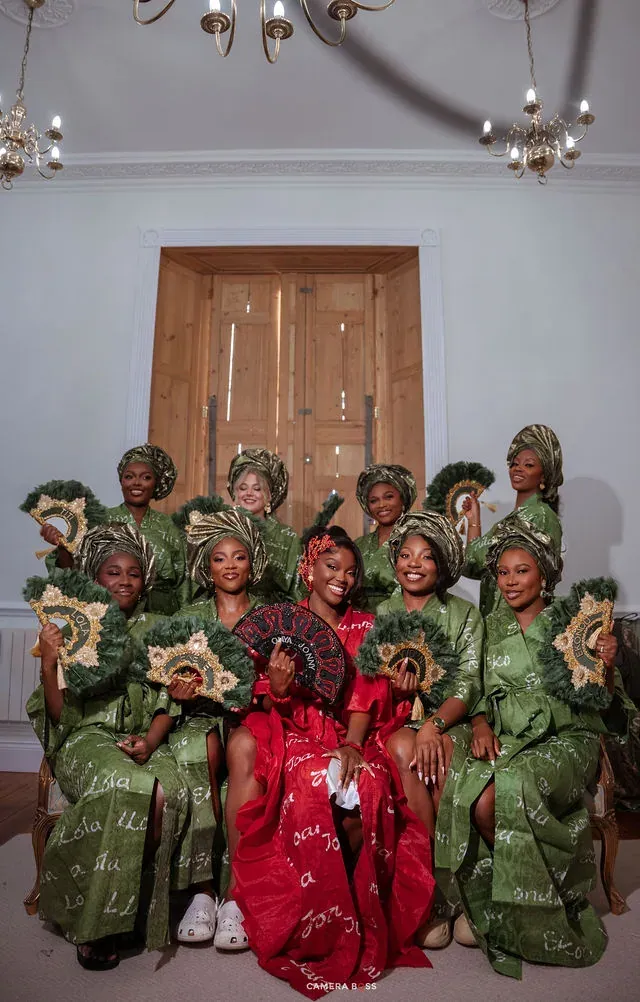
- Catering that matches the occasion. Nigerian, South Asian, Caribbean and many other celebrations rely on specific caterers. In my experience this is the first question large multicultural families ask about a venue, and it often decides the booking before anything else.
- Control of the budget. You can compare caterers and drinks suppliers rather than accept one package.
- Longer, more flexible days. Without a venue’s fixed catering schedule, you can shape the running order around your ceremony and speeches.
- Space for a wedding weekend. Bridebook also reports a rise in the wedding weekend, where celebrations are spread across several days.
What to check before you book a dry hire venue
- Licensing. If alcohol is going to be sold, the premises or event needs the right licence. Ask the venue what is in place and who is responsible.
- Hire hours. Check access for set-up and the finish time, including clear-up. Early access makes a big difference to decor and photography.
- Capacity. Compare the seated capacity with the standing capacity. A hall that holds 300 standing may seat far fewer once you add tables and a dance floor.
- Kitchen and power. Can a caterer cook on site, and is there enough power?
- Furniture and equipment. What do you have to hire in?
- Noise and neighbours. Check curfews and any music restrictions.
- Insurance and deposits. Ask what you must cover and what is refundable.
Booked a dry hire hall or still choosing?
Send us the venue name and your date. We will tell you how the room works for photography before you sign anything.
- Check your date. Send your date and venue through the contact page and we will reply with availability and a quote.
- See where prices start. Weddings from £2,500 (coverage begins at eight hours), engagement sessions from £500, portraits from £150 on the pricing page.
- Look at real days. Browse full weddings in our galleries, or read what couples say.
What dry hire changes for photography
Because you run the day, you also control the things that affect the pictures. Here is what I look at when a couple tells me their venue is dry hire:
- Ceiling height and group shots. A group of sixty needs height and space. Low ceilings mean a different approach.
- What the room looks like after dark. Many halls look very different at 9pm. If you are hiring your own lighting or decor, we can plan around it.
- Timings. Without a venue catering team calling the room, the caterer and the host set the pace. Agree when the food will be served and when the speeches will happen.
- A backdrop and stage. Large halls often have a stage or high table. A simple backdrop makes a huge difference to the photographs.
- Space for portraits. Find out whether there is outdoor space for a short portrait session, and where couples can step away.
We cover specific halls in our guides to Leicester event halls, London event halls, Manchester event halls and Bristol event halls. Each notes capacities and the catering position, because that is where dry hire decisions are made.
Dry hire and the wedding weekend
If you are planning a multi-day celebration, for example a traditional ceremony one day and a white wedding the next, hiring a space for the whole weekend can make sense. Our Yoruba wedding planning guide explains how coverage is organised across two ceremonies. If both days happen in the same hall, check the decor changeover time, because it can affect photography at the start of the second day.
Costs: where dry hire helps and where it does not
Dry hire can save money on catering, but you pick up the cost of equipment, staffing and sometimes licensing. Build a spreadsheet that compares the all-in cost against a venue package. Our guide to planning a 2027 wedding photography budget and the UK wedding budget guide show how the pieces fit together.
A sample timeline for a dry hire wedding
Dry hire days work best when someone owns the clock. This is a typical order, which we adapt to each venue and family:
- Morning: decor and furniture set-up, caterer arrives, photographer photographs the empty room and the details before guests come in.
- Ceremony: held in the hall or elsewhere, followed by family groupings.
- Portraits: a short session during the drinks, using outdoor space or a quiet corner of the building.
- Reception: entrances, speeches and the cake, coordinated with the caterer.
- Evening: dancing and the last moments, when the room looks its best once the lights are lowered.
Decor and lighting you hire in
One advantage of dry hire is that you can bring in your own decorators and lighting. Warm uplighters along the walls, fairy lights and candles make halls look far better after dark than overhead bulbs ever will. Ask your decorator to plan for the dance floor and the high table, where most of the evening pictures will be taken. And remember that if the room is dark, photographs need light; a few well-placed lamps help more than another garland.
Questions to ask your caterer
- When will each course be served, and how long will it take?
- Can the photographer be given a meal? Long days need a break, and this is a courtesy that makes a difference.
- Who tells the room when the speeches are about to start?
- Where will the cake be stored and cut?
- Is there a quiet area where the couple can eat?
Why we pay attention to the room first
A hall is not a studio. Ceiling height, wall colour and light sources all change the picture. Wherever possible I walk through the space ahead of the day, or ask for photographs of it set up at the time of day you will be using it. That way there are no surprises when a hundred guests arrive. If you can give us a floor plan, even a rough sketch, that helps too.
Questions couples ask about dry hire wedding venues
What does dry hire mean for a wedding venue?
It usually means you hire the venue space and arrange your own caterer, bar and often decor. What is included varies, so ask the venue to list it.
Is dry hire cheaper?
It can be, but it depends on equipment, staffing and licensing costs. Compare the total against a venue package.
Can I bring my own caterer to a wedding venue?
At a dry hire venue, yes. At other venues it depends on their approved supplier policy, so check before booking.
Do dry hire venues make photography harder?
Not usually. The main things to check are ceiling height, lighting after dark, timings and space for group photographs. We are happy to look at a venue with you.
Can you photograph a wedding at a hall I have booked myself?
Yes. Send us your date and venue and we will reply with availability and a quote.
Planning a 2027 wedding at a hall you have hired yourself?
We photograph weddings across the UK, including large multicultural celebrations. Tell us about your venue and we will plan coverage around the room.
- Check your date. Send your date and venue through the contact page and we will reply with availability and a quote.
- See where prices start. Weddings from £2,500 (coverage begins at eight hours), engagement sessions from £500, portraits from £150 on the pricing page.
- Look at real days. Browse full weddings in our galleries, or read what couples say.