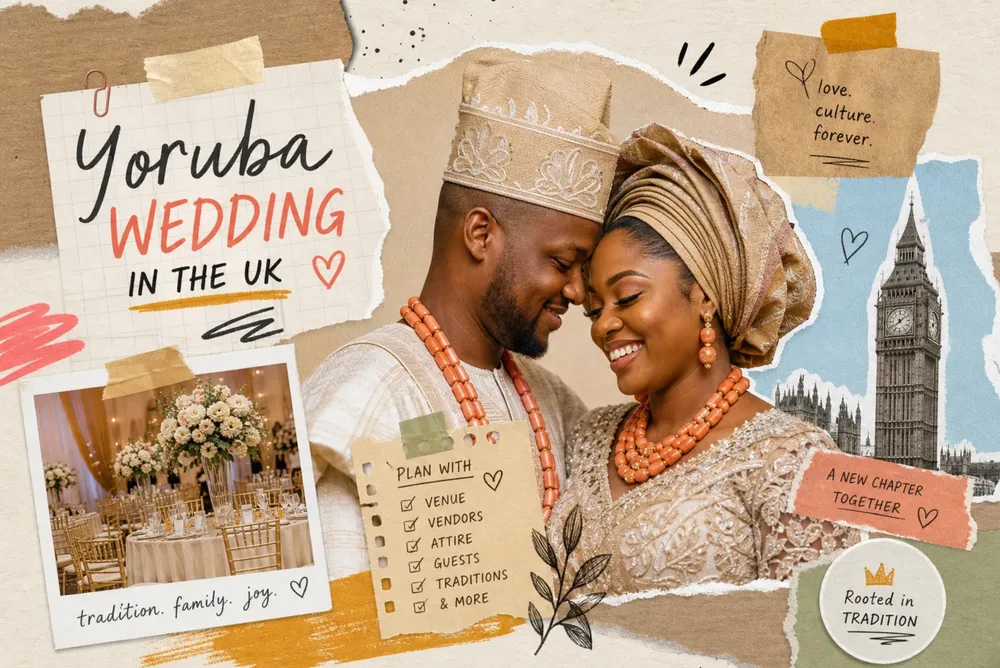
Planning a Yoruba wedding in the UK means holding two worlds in your hands at once — centuries of tradition on one side, UK register offices and supplier lead times on the other. This guide brings it all together in one place, so you spend less time searching and more time celebrating.
Why This Guide Exists
For diaspora couples planning a Yoruba wedding in the UK, finding clear and practical guidance in one place has always been harder than it should be. On one side, you have centuries of tradition: the prostrations, the wine-carrying ritual, the aso-oke, the families gathered to witness something far older than any venue booking system. On the other, you have UK register offices, supplier lead times, licensed premises, and banqueting halls that have never heard of an idana.
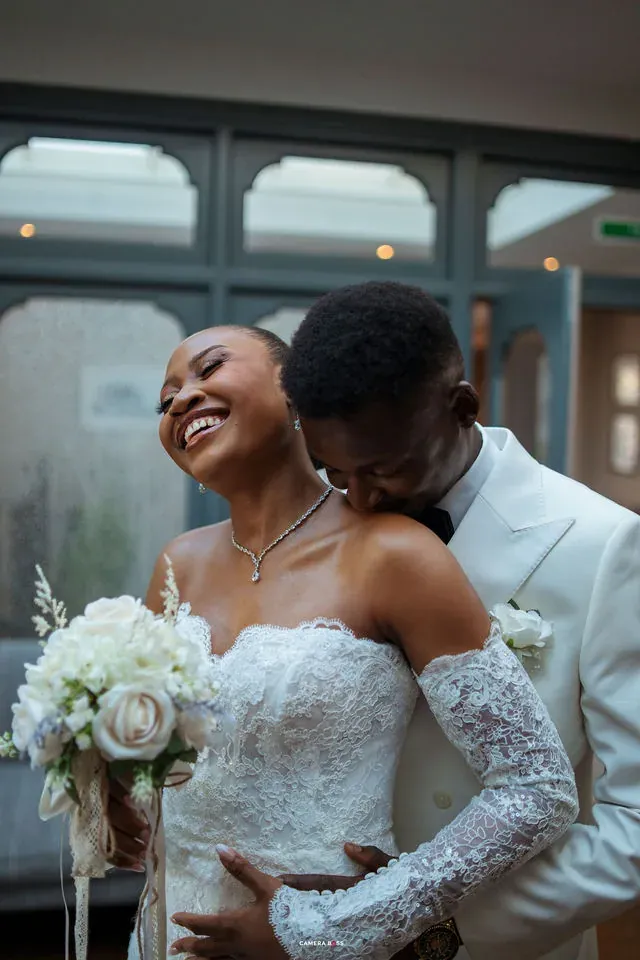
By the time you finish reading, you will know which ceremonies to include and what each one involves, how to make your marriage legally valid in England and Wales, what a realistic budget looks like at different guest counts, and what to look for in every supplier before you sign anything. We have also included guidance on planning your photography timeline, because at a Yoruba wedding, knowing when the key moments happen is as important as capturing them.
The team at Cameraboss has photographed Yoruba weddings across the UK — including in London, Leicester, Sheffield, and Manchester — which means couples rarely need to pause the celebration to explain what is happening and why. That matters more than most people realise, and we will come back to it.
The Three Ceremonies That Make Up a Yoruba Wedding
A Yoruba wedding is not one event. It is a layered process, and each stage carries its own weight and meaning. The good news for UK-based couples is that you do not have to include all three stages, and many diaspora families adapt the sequence to fit British logistics without losing the cultural heart of it. For a deeper overview of the full Nigerian wedding weekend structure, read our guide on the Nigerian wedding weekend explained.
The Family Introduction: Where It All Begins
The introduction, often called Mo mi n mo e, is the first formal meeting between both families. The groom's family arrives at the bride's family home to state their intention and ask formally for the bride's hand. Spokespeople represent each side, symbolic gifts — kolanuts, palm wine, and yam depending on family custom — are exchanged, and the occasion ends with an agreed date for the traditional wedding and the presentation of the bride's family's marriage list. In UK settings this often takes place in a family home or community hall, spanning an afternoon rather than a full day, though timings vary considerably by family and custom.
The Traditional Wedding Ceremony: The Heart of It All
The main Yoruba marriage rite, known as idana or igbeyawo, is the centrepiece around which most UK Yoruba weddings are built. The groom's family arrives to present the items from the marriage list — drinks, foodstuffs, fabric, and the bride price. The groom and his entourage prostrate before the bride's elders as a mark of deep respect. Then comes one of the most visually striking moments of any Yoruba celebration: the bride's entrance, dressed in full traditional attire, dancing in to music and the sound of celebration. The wine-carrying ritual follows, where the bride carries a cup to the groom and his acceptance of it signals the union.
"This is the ceremony that fills the room with colour, community, and the kind of joy that a photograph needs to earn."
The White or Civil Wedding: When and Whether to Include It
The church or registry wedding is not a Yoruba custom in origin. It is a separate, modern ceremony that many couples choose to include for legal, religious, or social reasons — typically following the traditional rite rather than preceding it. The traditional ceremony provides cultural recognition; the civil or religious ceremony provides legal recognition. Both matter, but they serve different purposes, and understanding that distinction removes a great deal of unnecessary confusion early in the planning process.
Making Your Yoruba Wedding in the UK Legally Valid
A traditional Yoruba ceremony, however meaningful and however large the guest list, does not by itself create a legally recognised marriage under UK law. Knowing this early saves couples a significant amount of stress.
In England and Wales, you must give notice at your local register office before the legal ceremony, naming the venue where the legal marriage will take place. That venue must be a register office, a licensed premises, or a registered place of worship — community halls and family homes are not automatically licensed for legal marriages. At least 28 days must then pass after notice before the ceremony can proceed. Full guidance is available on the GOV.UK marriages and civil partnerships pages.
In Scotland, notice must be given no earlier than three months and no later than 29 days before the ceremony. Check the National Records of Scotland guidance for current requirements. Documents in both countries typically include notice forms, proof of identity, and where relevant, a certificate of no impediment if one partner is not a UK resident.
The simplest sequencing for most couples is to complete the legal registration on a quieter separate day and dedicate the main celebration weekend entirely to the traditional ceremony. Many UK Yoruba couples do exactly this — it keeps the legal formalities clean and lets the traditional event breathe without administrative pressure.
A Realistic Planning Timeline
Some couples plan a Yoruba wedding in six months. Others take two years. The framework below accounts for the things that catch UK-based couples off guard: venue availability, supplier lead times from Nigeria, aso-oke tailoring windows, and legal notice periods.
12–18 Months Before
Set a rough date, agree with both families on which ceremonies to include, and schedule the family introduction. Begin venue research — popular banqueting venues for Nigerian weddings, particularly in London and the Midlands, book up early. Identify a Yoruba wedding coordinator who understands the ceremony structure without needing a briefing from scratch.
6–12 Months Before
Lock in your key suppliers: photographer, caterer, aso-oke supplier, and gele dresser. For attire sourced from Nigeria, allow at least three to four months for tailoring. Give legal notice to your register office during this period if marrying in England or Wales. UK fabric suppliers such as Metro Textiles and Afrique Fabrique London can reduce lead times significantly — always confirm dispatch times directly.
Final 3 Months
Fittings, aso-ebi fabric distribution, guest confirmations, and venue walkthroughs. This is also when you brief every supplier on ceremony order. A detailed briefing with your photographer and videographer at this stage is not optional — it is the difference between images that tell the full story and images that miss the moments that matter most.
What a Yoruba Wedding in the UK Actually Costs
Honest budgeting is one of the most useful things a planning guide can offer. The figures below are based on current UK market research and supplier pricing, and will vary by region, supplier, and production level.
| Guest Count | Typical Budget Range | Key Cost Drivers |
|---|---|---|
| Up to 80 guests | £3,300 – £8,500 | Community hall, home catering supplement, solo photographer |
| 80–200 guests | £7,500 – £18,000 | Banqueting venue, full professional catering, 2-photographer team |
| 200+ guests | £16,000 – £39,000+ | Large London or Midlands venue, full production, coordinator |
Venue and catering take the largest share at every scale. Venue hire ranges from around £600 for a community hall to £10,000 or more for a large London banqueting space. Nigerian wedding catering in the UK typically runs at £30 to £70 per head. For traditional attire, custom aso-oke sets start from around £500 and rise to £3,000 or more. Gele dressers in the UK typically charge between £100 and £700 depending on how many guests are being styled — book your gele dresser at the same time as your photographer, as both fill up quickly for popular dates.
Photography and videography packages from Cameraboss are built around the full day of a traditional Yoruba celebration, with options that include pre-wedding shoots and edited albums. Contact us directly to discuss current availability and what is included.
Finding Authentic UK Suppliers Who Already Understand the Culture
There is a practical difference between a supplier who has worked at a Yoruba wedding before and one who is willing to learn on the day. The former means you spend your energy celebrating. The latter means you spend it explaining.
For planners, look for teams with explicit Nigerian or Yoruba wedding portfolios. Ask specifically: have you planned a Yoruba traditional wedding before, and can you show me images or references from a similar event? The same question applies to caterers — feeding two or three hundred guests a hot Nigerian spread is a specific skill set, and a caterer's track record with large-scale Nigerian events is worth verifying directly.
For aso-oke and gele, domestic UK suppliers reduce delivery uncertainty considerably. Metro Textiles and Afrique Fabrique London both stock traditional fabrics. Etsy UK shops including Urbanstax and ExpressionsCouture sell aso-oke by the metre with UK dispatch — always confirm current lead times and delivery options before ordering. If having outfits custom-tailored, start no later than four months before the wedding.
Why Your Photographer Needs to Understand the Ceremony, Not Just the Camera
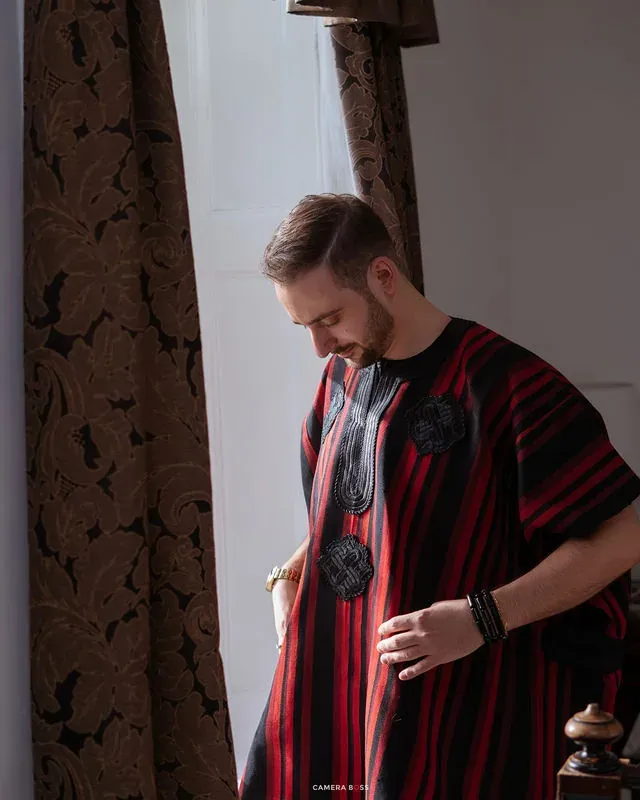
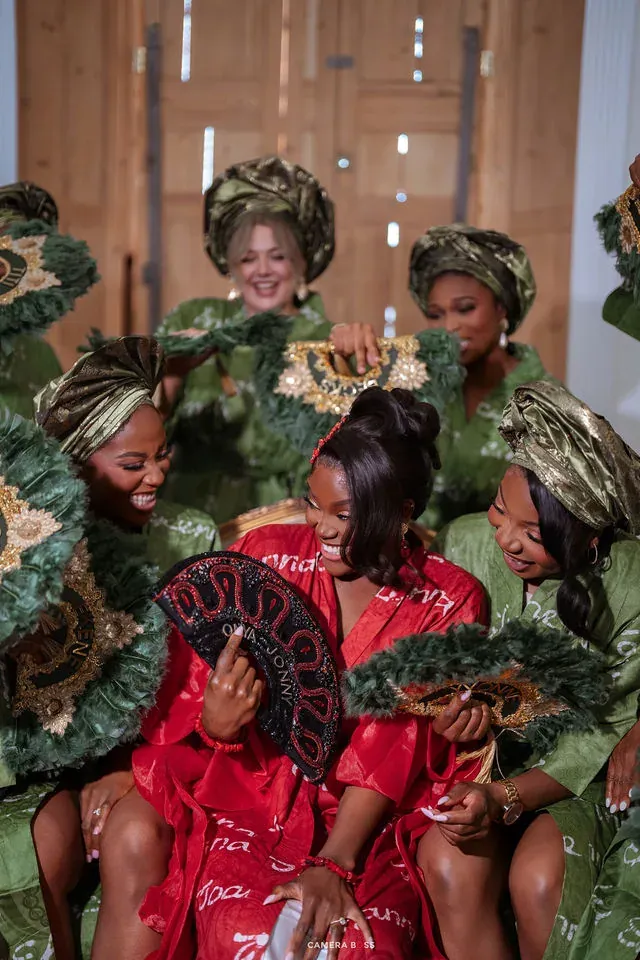
A Yoruba traditional wedding is one of the most visually layered celebrations a photographer in the UK will encounter. The colour alone is extraordinary: the aso-oke, the gele, the agbada, the coral beads. But the moments that make a wedding album truly tell the story are quieter and faster than they look — the exchange during the wine ritual, the bride's face as she approaches the groom, the prostration before the elders, the spontaneous dancing that erupts when the right song plays.
These moments are not on a schedule. They happen because the ceremony has its own rhythm. A photographer who already knows that rhythm does not miss them. One who is discovering it in real time often misses them — not through any fault of skill, but through unfamiliarity.
"Cultural familiarity — knowing when the wine ritual happens, understanding the significance of the prostration — is as important as technical skill."
At Cameraboss, John Lekan brings lived Yoruba cultural knowledge alongside professional photographic and film craft. The team arrives at every traditional ceremony with prior knowledge of the ceremony structure, works alongside the family and MC rather than around them, and delivers editorial fine art imagery and cinematic wedding films that reflect the full grandeur of what Yoruba and Nigerian celebrations actually look like. Browse our portfolio to see traditional Yoruba wedding coverage across the UK, and read more about John Lekan's story and approach.
When assessing any photographer for a traditional Yoruba marriage in the UK, ask whether their portfolio includes traditional ceremonies — not just white weddings. Ask how they handle low-light conditions in a busy hall. Ask whether they can also deliver a wedding film so the ceremony lives in both image and motion. Treat that conversation as a cultural exchange, because the quality of that conversation will tell you a great deal about how your wedding day will be handled.
Frequently Asked Questions: Yoruba Wedding in the UK
Yes, if you want your marriage to be legally recognised. A traditional Yoruba ceremony does not confer legal status under English, Welsh, or Scottish law. Many couples complete the legal registration quietly beforehand and dedicate their main celebration to the traditional ceremony — it is a clean, stress-free approach that many diaspora families prefer.
Custom aso-oke sets typically start from around £500 and can reach £3,000 or more depending on fabric quality and the number of outfits required. Allow at least three to four months for tailoring if fabric is sourced from Nigeria, or confirm current lead times with UK suppliers such as Metro Textiles or Afrique Fabrique London before ordering.
For popular dates, 12–18 months ahead is advisable for venue and photography bookings. Aso-oke tailoring should begin at least four months before the event. Caterers and gele dressers experienced in Nigerian weddings also book quickly — aim to confirm these six to twelve months out wherever possible.
Absolutely. Cameraboss has covered Yoruba weddings in Leicester, Manchester, Sheffield, Birmingham, and beyond. Supplier availability varies by location, so identifying culturally experienced planners, caterers, and photographers who serve your area — or who travel — is an important early step. Get in touch with us and we can advise on coverage for your location.
Ask to see portfolios that include traditional Yoruba or Nigerian ceremonies specifically — not just white weddings. Ask how the photographer handles the ceremony's unscripted moments and whether they can deliver both still images and a wedding film. Browse the Cameraboss portfolio to see our traditional wedding coverage across the UK, or contact us directly to discuss your day.
Start With What Matters Most, Then Build Outward
Planning a Yoruba wedding in the UK is entirely achievable. It does not require choosing between cultural authenticity and practical logistics. When you understand the ceremony structure, complete the legal steps early, budget honestly, and build a supplier team that genuinely understands the culture, the whole process becomes far more manageable than it first appears.
Start with the ceremonies that matter most to both families. Let those anchor the day and build the rest of your planning around them. The venue, the catering, the attire — all of it follows from knowing what you are actually celebrating and why.
Explore the Cameraboss blog for more guides on Nigerian and Yoruba wedding planning across the UK. And when you are ready to talk about how your day should be documented, reach out here — we already understand the celebration before the conversation even begins.
Planning a Yoruba Wedding in the UK?
From the idana to the igbeyawo, from the wine ritual to the dance floor — Cameraboss documents every layer of your traditional celebration with cultural fluency and cinematic craft. London, Leicester, Manchester, Sheffield, Birmingham and beyond.
Further reading from the Cameraboss blog:
→ The Nigerian Wedding Weekend Explained: A Photographer's Guide
→ How to Plan Your Wedding Day Photography Timeline
→ Browse all Cameraboss blog posts
Cameraboss Multimedia Ltd · cameraboss.co.uk
Award-winning British-Nigerian luxury and documentary wedding photographer · Creative Photographer of the Year, Creative Industry Awards 2024
Serving couples across the UK: London · Manchester · Newcastle · Birmingham · Liverpool · Sheffield · Leicester · Leeds · Bristol · Derby · Nottingham