Cameraboss · Wedding Culture & Planning · 27 July 2026
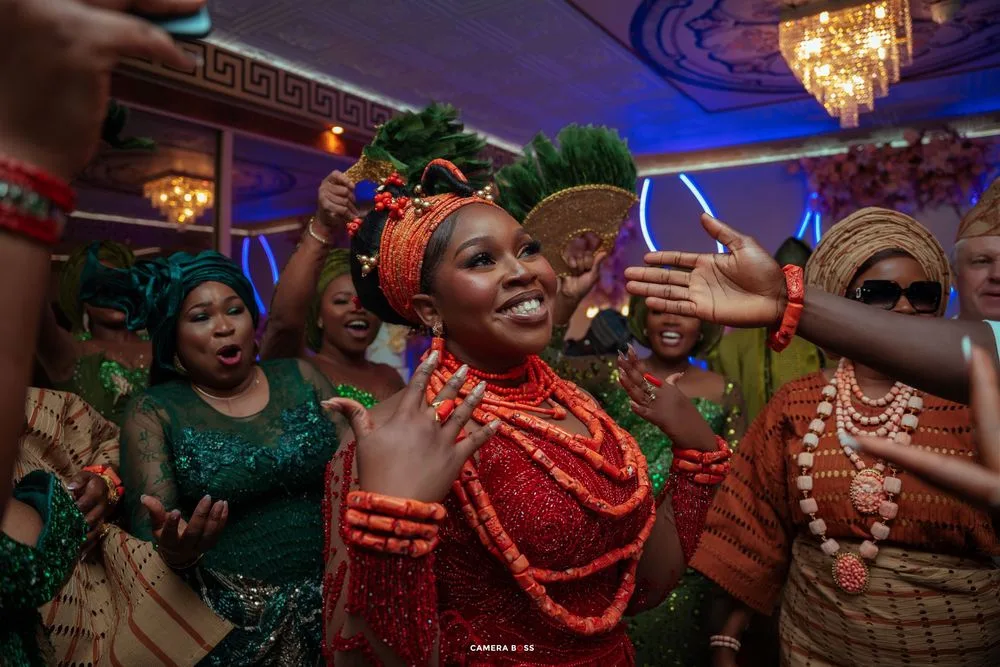
There is a moment, usually just before the couple's entrance, when I step back and take in the room. Every seat filled. A sea of colour — waves of gold lace, blocks of deep wine, rivers of cobalt blue — worn by people who have loved this couple long enough to dress for them. That is Aso-Ebi. And if your photographer doesn't understand it, they will miss some of the most beautiful photographs of your entire wedding day.
At Cameraboss, we have spent years documenting Nigerian and African weddings across the UK — from ballrooms in Birmingham to church halls in Nottingham, from Leicester banqueting suites to manor houses in Manchester. And in all of that time, few visual elements have as much power to lift a photograph from a record to a piece of art as Aso-Ebi, handled well.
In this guide, we are going to walk you through what Aso-Ebi is, why it matters, how to plan around it photographically, and — crucially — what to look for in a photographer who will do it justice.
What Is Aso-Ebi and Why Does It Matter at Nigerian Weddings?
The term Aso-Ebi comes from Yoruba — it translates loosely as “family cloth” or “cloth of kin.” Traditionally, it refers to a shared fabric distributed among family members and close friends of the couple, so that they wear matching or coordinated outfits on the wedding day. Over time, Aso-Ebi has grown into something far larger and more nuanced — a full visual ecosystem that signals belonging, social bond, and celebration.
At most Nigerian weddings you will attend in the UK today, Aso-Ebi is not one fabric but several. The bride's family might wear one colour. The groom's family another. Close friends might have a third option. The wider guest list may receive yet another fabric — and the sprayers, the Alaga, the groomsmen and the bridesmaids each have their own layer of the palette. By the time the room is full, you are looking at an extraordinary composition in colour and cloth.
This is not decoration. It is a visual language. And for a photographer, it is one of the most powerful compositional tools in the room — if they know how to see it.
The Aso-Ebi Colour Story — From Fabric Selection to the Wedding Day
Couples typically choose their Aso-Ebi fabrics months before the wedding — often at the same time as planning venues and menus. Fabrics like George, Ankara, damask, lace, and Swiss voile are common choices, and the exact colour is usually tied to the couple's wedding palette.
When I sit down with couples during the enquiry process, I always ask about Aso-Ebi early. Not because it changes how I photograph the ceremony — but because it changes how I plan the rest of the day. A wine-and-gold scheme shoots very differently from pale champagne and sage. Deep jewel tones require different exposure decisions to delicate pastels. Late afternoon light falls differently on sheer voile than it does on structured lace.
Good wedding photographers who work with Nigerian and African couples in the UK don't treat Aso-Ebi as a background detail. They treat it as a character in the story. It tells you where people came from, who they are to the couple, and just how much this community has shown up to celebrate together. Capture that, and you have something that will genuinely move people when they look at the album thirty years from now.
Read more about how we approach the full Nigerian wedding weekend as photographers.
How Many Aso-Ebi Groups Are There at a Typical Nigerian Wedding in the UK?
This varies enormously — and it's one of the things worth discussing with your photographer before the day. In our experience photographing Yoruba, Igbo, and mixed-heritage weddings across the UK, we typically encounter between two and five distinct colour groups at a single wedding:
The bride's family group — often in the bride's chosen colour, sometimes coordinated with her traditional outfit for the Aso-Ebi entry or the traditional ceremony.
The groom's family group — usually a contrasting or complementary tone to the bride's family, which makes for beautiful colour blocking in group photographs.
Close friends and bridal squad — sometimes a softer or shinier version of the main palette; sometimes an entirely different statement fabric chosen to stand apart.
The wider guest Aso-Ebi — distributed to a broader social circle. These guests typically wear it with more creative licence; same cloth, entirely different silhouettes and styling.
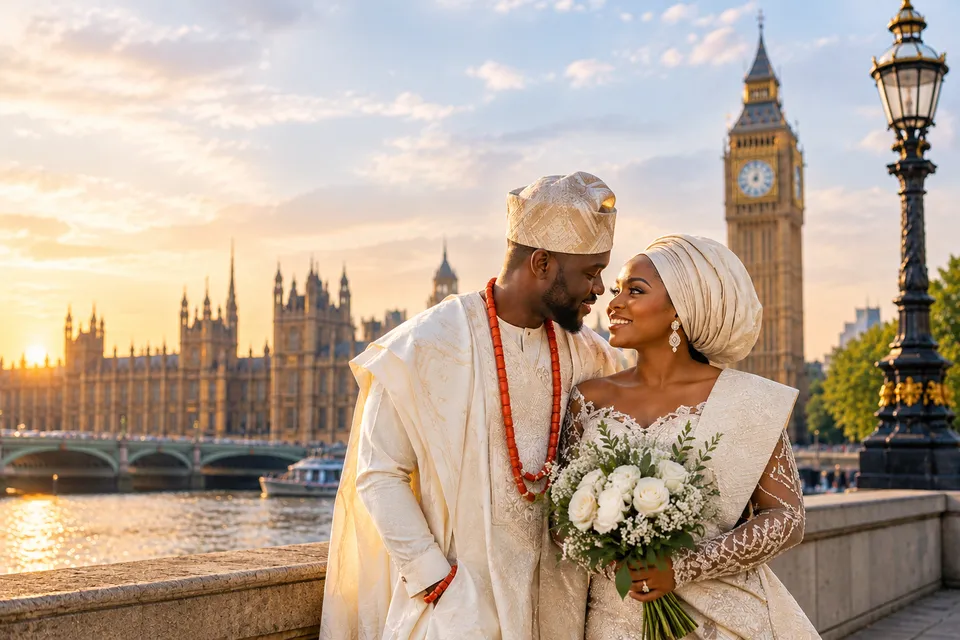
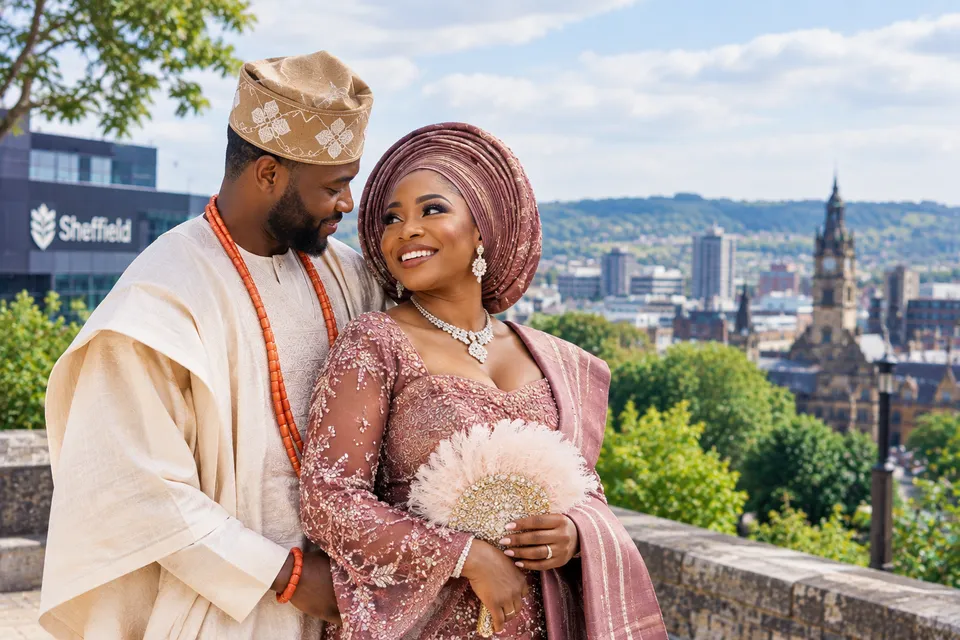
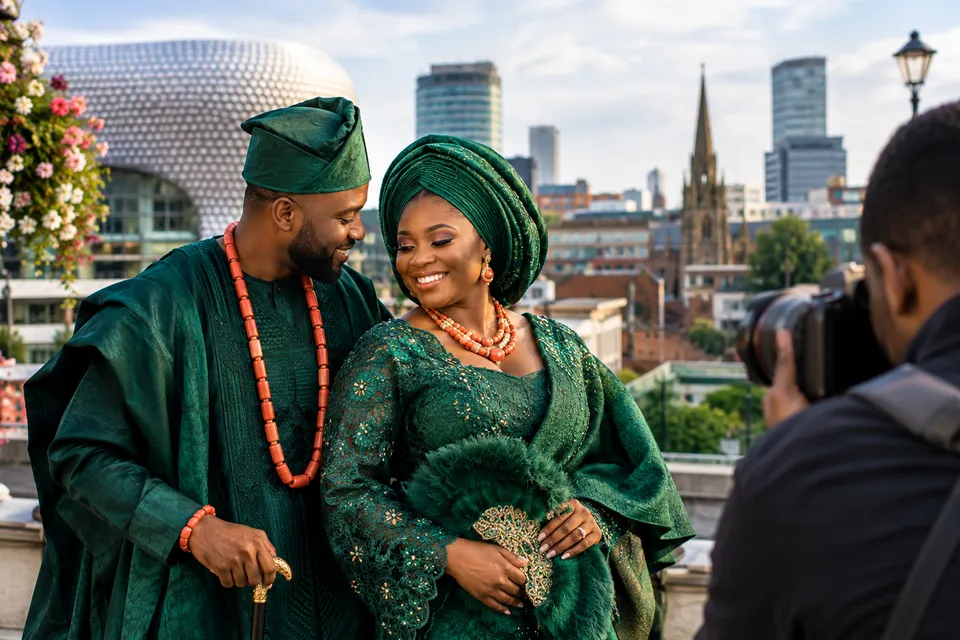
The couple's own outfits — the bride and groom's attire is the centrepiece around which all of this colour is organised. Their Iro and Buba, their Agbada, their beaded Gele and Fila — these are the point from which the entire visual language radiates outward.
Understanding this layered structure allows a skilled documentary photographer to plan shots that tell the group story without the chaos of trying to improvise it on the day.
How Your Photographer Should Work With Aso-Ebi
The most common mistake photographers make at Nigerian weddings is treating Aso-Ebi group shots as a logistical obligation — something to tick off between the ceremony and the reception. They rush the family groups, underexpose the deep-toned fabrics, or miss the candid moments when aunties are adjusting each other's Geles or spraying money mid-group.
At Cameraboss, we approach Aso-Ebi photography in three layers:
The grand group shots — organised, composed, and taken at a moment in the day when light is cooperating and the family is still energised. We work with couples in advance to agree on a priority group list and a rough timing window. These are never rushed.
The candid colour moments — the spraying, the dancing, the clapping, the aunties' expressions when the couple makes their entrance. These are the frames you cannot stage, only anticipate. Documentary instinct and cultural familiarity are what separate photographers who get these shots from those who don't.
The detail close-ups — fabric texture, embroidery, hand positions, jewellery against lace. Aso-Ebi is not just about groups. It is about material, craft, and care. A close-up of a hand-beaded George wrapper says as much about your family's investment in this day as any wide group shot.
We have covered the art of candid wedding photography in detail on this blog — and everything in that approach applies doubly at Nigerian weddings, where the unscripted moments are often the most powerful ones in the entire day.
Tips for Couples: Getting the Best Aso-Ebi Photos on Your Wedding Day
Share your colour palette with your photographer before the day. Send them fabric swatches, mood boards, or simply a WhatsApp message with the Aso-Ebi colours. This is genuinely useful — it changes how we plan the day's light and our approach to certain shots.
Build your group shot list at least two weeks before the wedding. We ask all our couples for this. A well-planned family group list means we spend fifteen minutes doing group shots beautifully, rather than forty-five minutes doing them chaotically.
Assign a family liaison on the day. Someone who knows both sides of the family and can round people up efficiently. Not your planner, not the Alaga — a trusted family member whose only job during group shots is to locate people and bring them to the spot.
Trust the Owambe energy. The instinct is sometimes to slow down, to quieten the room, to make it more “Western wedding.” Please resist this. The energy, the noise, the spontaneous dancing — this is where the best photographs happen. A great documentary photographer will chase that energy, not suppress it.
If you're still thinking through how to choose the right photographer for your Nigerian or African wedding in the UK, our full guide is here: How to Choose a Wedding Photographer as a Nigerian or African Couple in the UK.
Frequently Asked Questions About Aso-Ebi & Wedding Photography
Do I need to tell my photographer about my Aso-Ebi colours in advance?
Yes, and the earlier the better. Colour affects everything from exposure settings to the way we plan natural light portraits. If we know your Aso-Ebi palette before the day, we can make informed decisions about timing, backdrop choices, and how we approach the group sections of the day.
How long should Aso-Ebi group photos take?
With a well-prepared group list and a designated family liaison, beautiful Aso-Ebi group shots can be done in fifteen to twenty minutes. Without either of those things, it can easily stretch to an hour — and the energy in the room will tell. We always recommend scheduling group shots right after the ceremony, before the reception kicks off, when families are still together and alert.
Can my photographer handle multiple Aso-Ebi colour groups in one session?
Absolutely — as long as the day is planned to accommodate it. We have photographed weddings with five distinct Aso-Ebi groups in a single session and produced beautiful results from all of them. The key is pre-planning and communication, which is why we build this into every consultation we do with Nigerian and African couples.
What if my wedding is at a venue with difficult lighting?
This is common in the UK, where many ballroom and banqueting venues favour dramatic low lighting for atmosphere. We carry additional lighting equipment to all Nigerian weddings for exactly this reason. Deep-toned Aso-Ebi fabrics in low ambient light need thoughtful supplemental lighting to render properly — this is not something to leave to chance or assume the venue will sort out.
Is Aso-Ebi only worn at Yoruba weddings?
Not at all. While Aso-Ebi is rooted in Yoruba tradition, it has become a joyful feature of Nigerian weddings across all tribes — Igbo, Hausa, Edo, and beyond. We also see Aso-Ebi-style coordinated dress at Ghanaian and wider West African celebrations. Each community brings its own fabric traditions and styling, and we love the variety we encounter across the weddings we photograph.
At Cameraboss, Aso-Ebi Is Never an Afterthought
We are a brand built on cultural fluency. Not because we once photographed a Nigerian wedding and decided to market ourselves that way — but because this community is our community. John Lekan Durojaye, founder of Cameraboss, is British-Nigerian, born of Yoruba roots, and has spent years building a practice that honours the visual richness of Nigerian and African celebrations with the same craft and attention that fine art photographers bring to any great subject.
When the Aso-Ebi fills a room — when the colours hit the light and the music rises and the couple walks in and two hundred people who love them erupt simultaneously — we are ready. We have been ready for a long time. That moment is what we came for.
We photograph Nigerian and African weddings across the whole of the UK: London, Leicester, Manchester, Birmingham, Sheffield, Nottingham, Newcastle, Bristol, Leeds, and beyond. We also travel to Nigeria for Lagos and Abuja celebrations. You can see our full wedding gallery and real Yoruba wedding stories on the blog.
Ready to Book a Photographer Who Understands Your Wedding?
We work with Nigerian, African, and multicultural couples across the whole of the UK. Let's talk about your date, your Aso-Ebi palette, and how we can make it look extraordinary.
Cameraboss Multimedia Ltd · cameraboss.co.uk · @thecameraboss
Award-winning wedding & documentary photographer. Creative Visionary of the Year 2026. Exhibited at Boomer Gallery, London & RBSA, Birmingham.
Enquiries: camerabossmultimedia@gmail.com